Home›Blog›Bangkok solo travel guide: safety, where to stay, what to do, and how to meet people (2026)
Bangkok solo travel guide: safety, where to stay, what to do, and how to meet people (2026)
Bangkok is the city I'd send a first-time solo traveller to before anywhere else in Asia. It is cheap, it is safe by any big-city standard, the trains are easy, and it is so used to people arriving alone that nobody will look at you twice.
It is also, if you are not careful, a city where you eat every meal by yourself. Thai food is cooked for a table, the best evenings here happen in groups, and the only real problem of solo Bangkok is not safety or scams. It is company.
This guide covers the practical side properly — safety, neighbourhoods, transport, costs, a three-day plan — and then spends real time on the part most guides wave at in one paragraph: how to actually meet people here. Prices are in Thai baht and were right when I wrote this; they drift, so treat them as a guide.
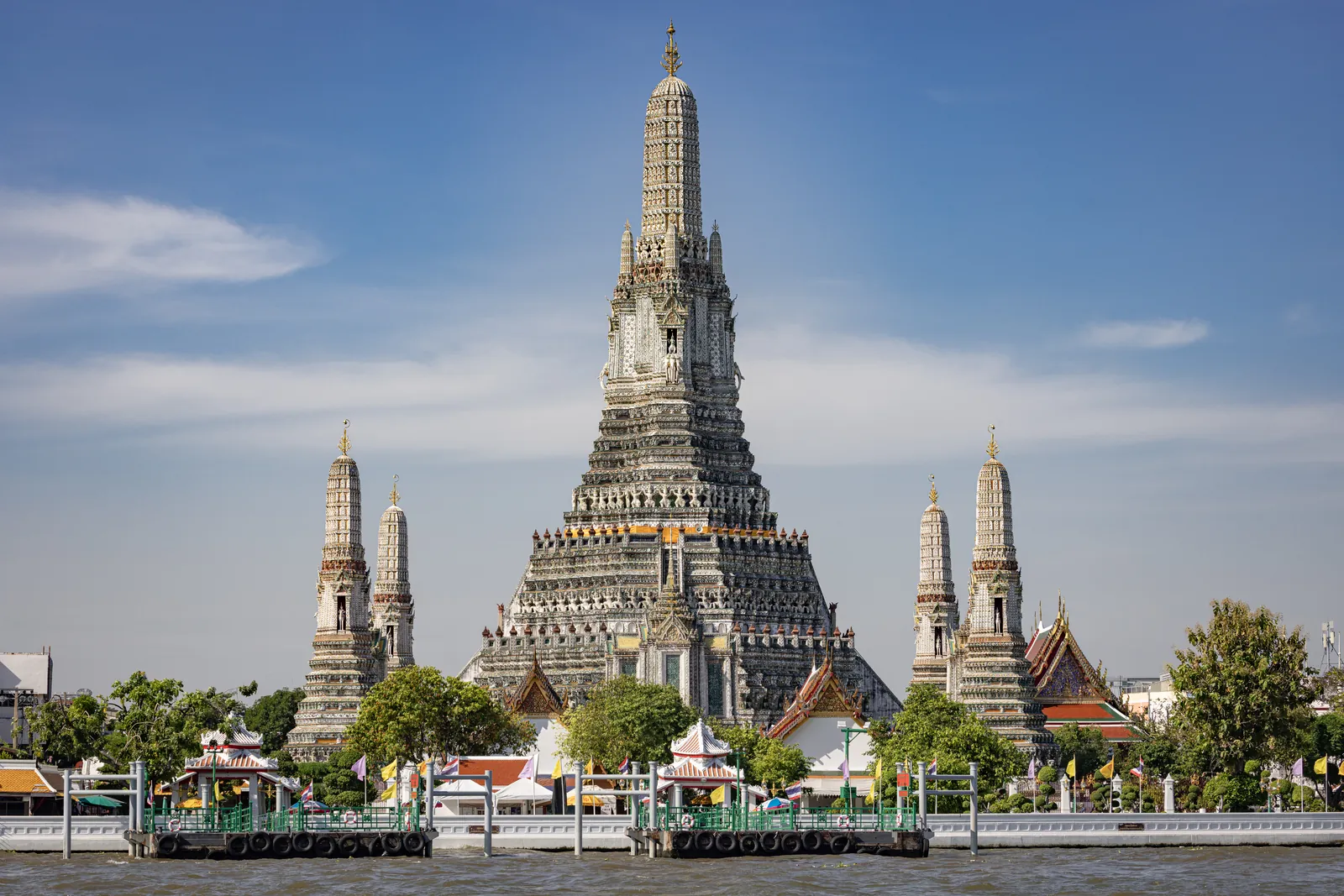
Bangkok solo travel at a glance
| Is it safe alone? | Yes. Petty scams, not violence. Solo women travel here constantly. |
| How many days | 3 full days for the city; 4–5 with a day trip |
| Best months | November to February (cool, dry). Avoid mid-April unless you want Songkran. |
| Daily budget | 1,200–1,800 ฿ on a hostel-and-street-food budget; 3,000–4,500 ฿ comfortable |
| Getting around | BTS Skytrain, MRT, Grab, river boats. Skip tuk-tuks for real journeys. |
| Where to sleep | Ari or Phrom Phong for calm, Rambuttri for company, Riverside for the view |
| Language | Enough English everywhere tourists go; Google Translate for the rest |
| The one app to install | Grab. Then MeetMap, if you want dinner company (more below). |
Is Bangkok safe for solo travellers?
Yes, and I'd say it plainly rather than hedging. Violent crime against tourists is rare. What Bangkok has instead is a small, well-documented repertoire of scams that every visitor meets in their first 48 hours, and once you know the scripts they are almost funny.
The "temple is closed" scam. A friendly, well-dressed person near the Grand Palace or Wat Pho tells you it's closed today for a ceremony, and helpfully suggests another temple, reachable by a tuk-tuk that happens to be right there. The temple is not closed. The tuk-tuk goes to a gem shop or a tailor. Walk to the gate and see for yourself.
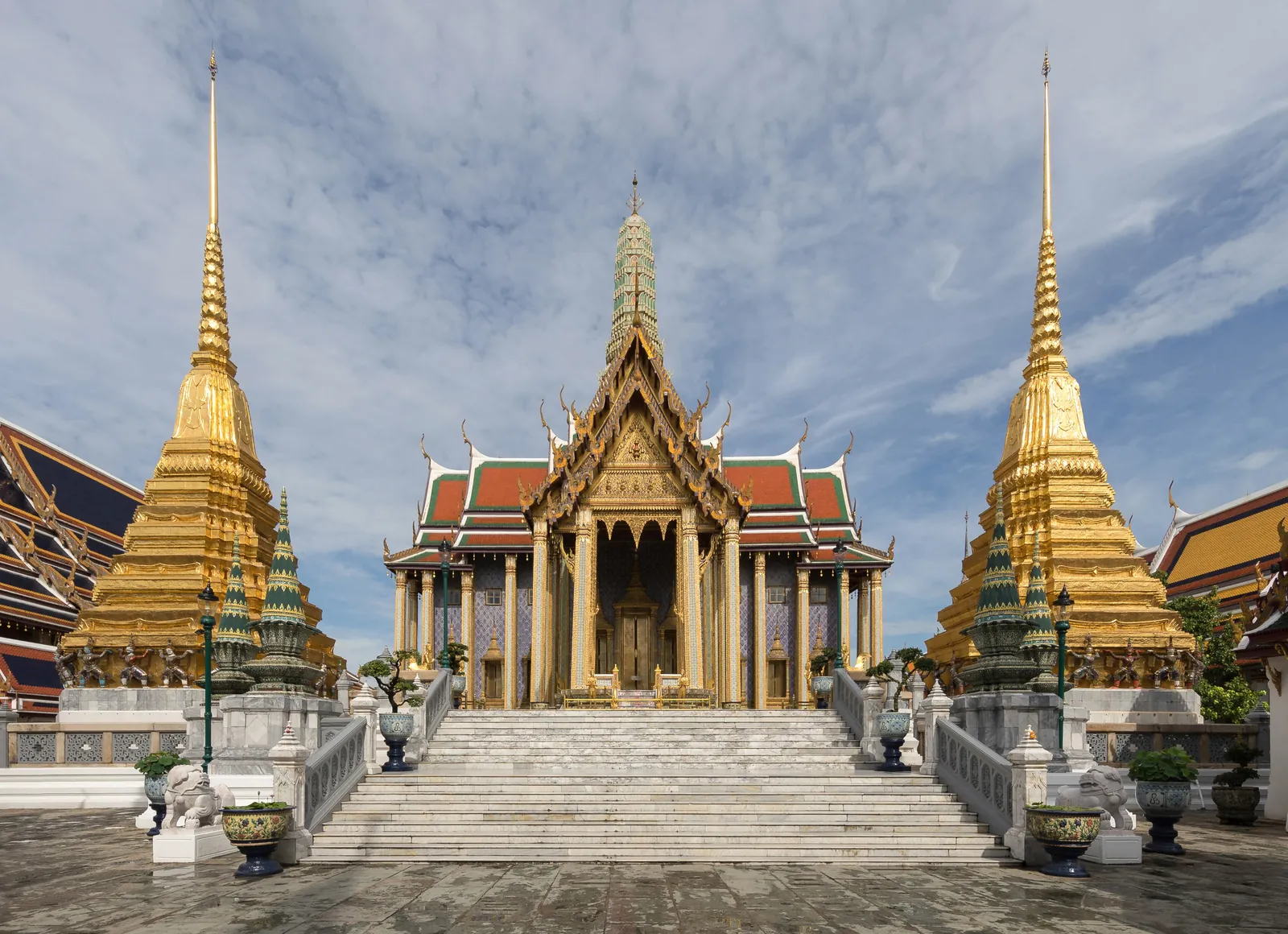
The 20-baht tuk-tuk tour. Same ending, different opening. Nobody drives you around for 20 baht out of kindness.
The taxi meter. Some drivers, especially outside malls and at night, refuse to use the meter and quote a flat price three times the real fare. Say "meter please"; if they refuse, close the door and get the next one, or open Grab.
Jet-ski and motorbike rental damage. More of a beach problem than a Bangkok one, but if you rent a scooter here, photograph every scratch first.
Bar bills. In Patpong and a few Khao San bars, "free show" invitations end with a bill that has a lot of zeros. Don't go up any stairs you weren't planning to.
That's the list. Beyond it, the rules are the ones you'd use anywhere: keep your drink in sight, keep your phone in a front pocket in crowds, use Grab late at night rather than walking unfamiliar streets, and tell someone where you're going when you meet a person you've only met online. I've put the general version of that on our safety page.
Is Bangkok safe for solo female travellers?
Yes, and thousands of women do it every week. The things worth knowing: dress covers shoulders and knees at temples (they sell sarongs at the gate if you forget), the BTS has women-only carriages at rush hour on some lines, and Grab is the answer to any late-night transport question. Thai culture is not a touching culture; unwanted attention is rarer here than in most European capitals.
When to go
Bangkok has three seasons, and the difference matters more than you'd think.
- November to February is cool and dry. "Cool" means 25–32°C. This is the season; book ahead in December and January.
- March to May is hot. 35–40°C, and the city slows down. Mid-April is Songkran, the water-fight new year: brilliant if you want it, unbearable if you don't.
- June to October is rainy. In practice this means a downpour most afternoons that lasts an hour, and otherwise green, cheaper, and quieter. Nobody cancels plans for the rain; they wait under an awning.
How long to stay
Three full days gets you the temples, one market, Chinatown at night, a boat, and a neighbourhood. Four adds Ayutthaya or the railway market. More than five, and you're better off going somewhere else and coming back through Bangkok at the end, which is what most people do anyway.
Where to stay in Bangkok on your own
I'm not going to list hotels — they change, and I'd rather tell you which neighbourhood, because that decides your trip more than the room does.
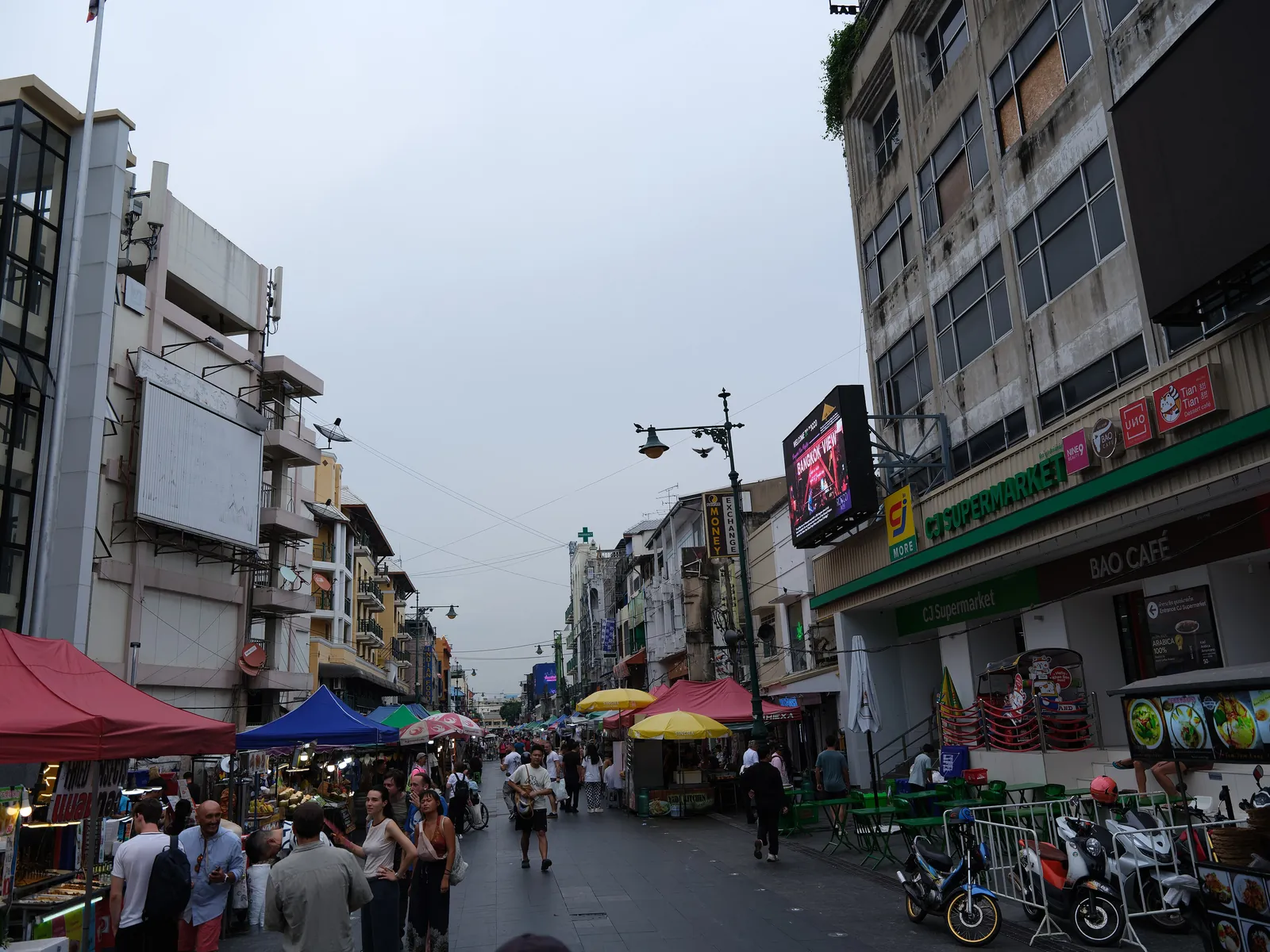
Rambuttri (and Khao San) is where the backpackers are. Khao San Road itself is loud and past its best; Rambuttri, the lane around the corner, is the same crowd at half the volume, with guesthouses and cafés whose tables are close enough that conversations spill over. If your priority is meeting other travellers, sleep here. It's poorly connected to the trains, so budget for Grab or the river boat.
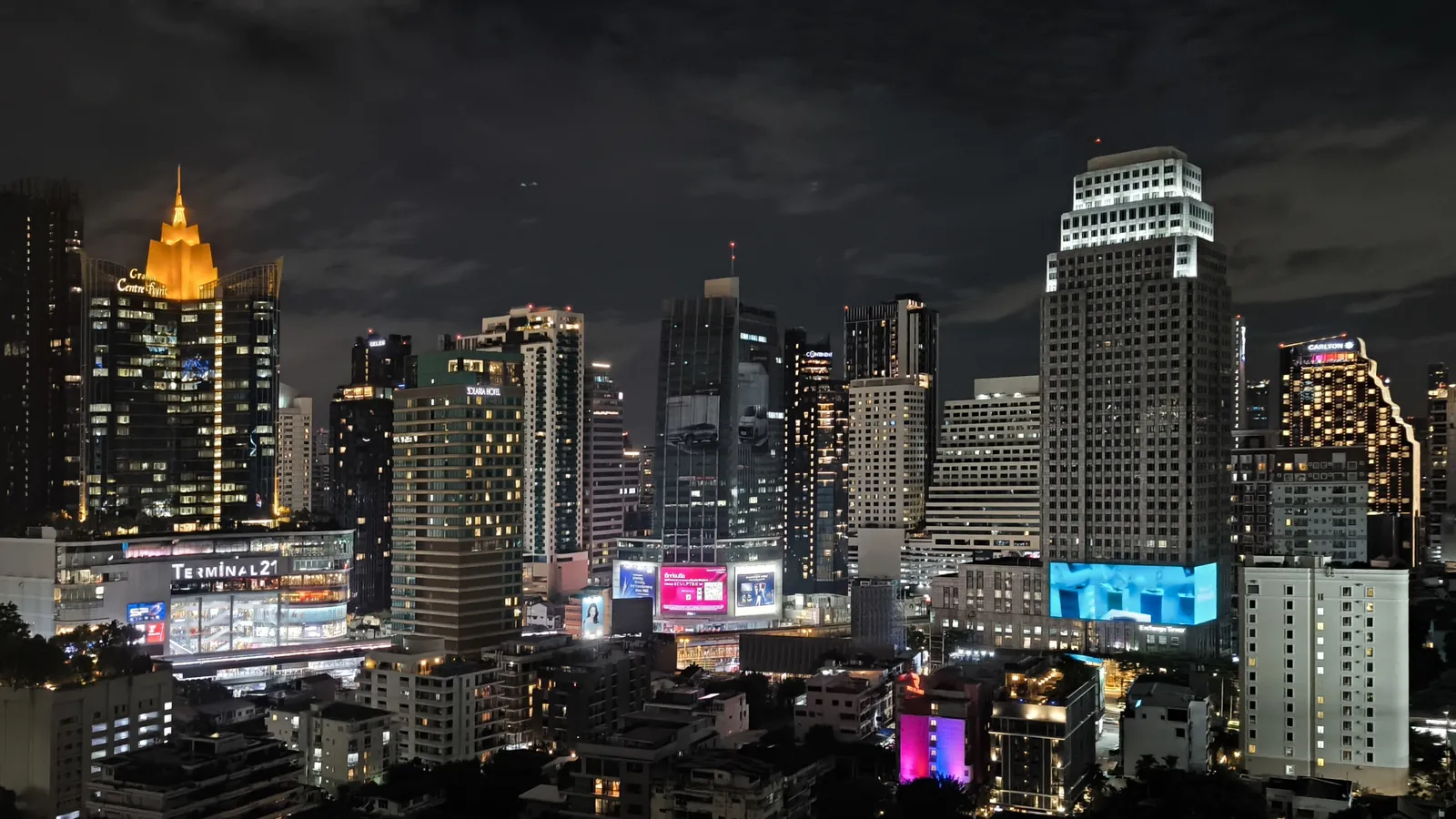
Ari is a local neighbourhood one BTS stop north of the tourist centre with cafés, a real morning market, and nobody trying to sell you anything. Quiet, cheap, and where I'd stay if I wanted to feel like I lived here.
Phrom Phong / Thonglor / Ekkamai, along Sukhumvit, is the expat and mid-range strip: malls, Japanese food, the bars. Well connected, more expensive, easy.
Riverside is the view. Ferries at your door, temples across the water, and the rest of the city forty minutes away. Best for a last night, not a first.
Silom / Sathorn is the business district, which means good-value hotels at weekends, Lumphini Park on your doorstep, and the Patpong night market (go once, for the experience).
Hostels here run about 300–600 ฿ for a dorm bed and 800–1,500 ฿ for a private room; decent hotels start around 1,500–2,500 ฿. Book the first two nights and decide the rest when you arrive.
Getting around
From Suvarnabhumi Airport (BKK): the Airport Rail Link runs to Phaya Thai in about 30 minutes for around 45 ฿, and connects to the BTS there. A metered taxi is 300–450 ฿ to the centre including the 50 ฿ airport surcharge and tolls; join the official taxi queue on the ground floor, not the touts inside. From Don Mueang (DMK), the second airport, there's a train to Bang Sue and buses to Mo Chit; a taxi is a similar price.
BTS Skytrain is the elevated line through the modern city — Siam, Sukhumvit, Silom, Chatuchak. Fares are roughly 17–62 ฿; buy single tokens or a Rabbit card. It runs from about 6am to midnight.
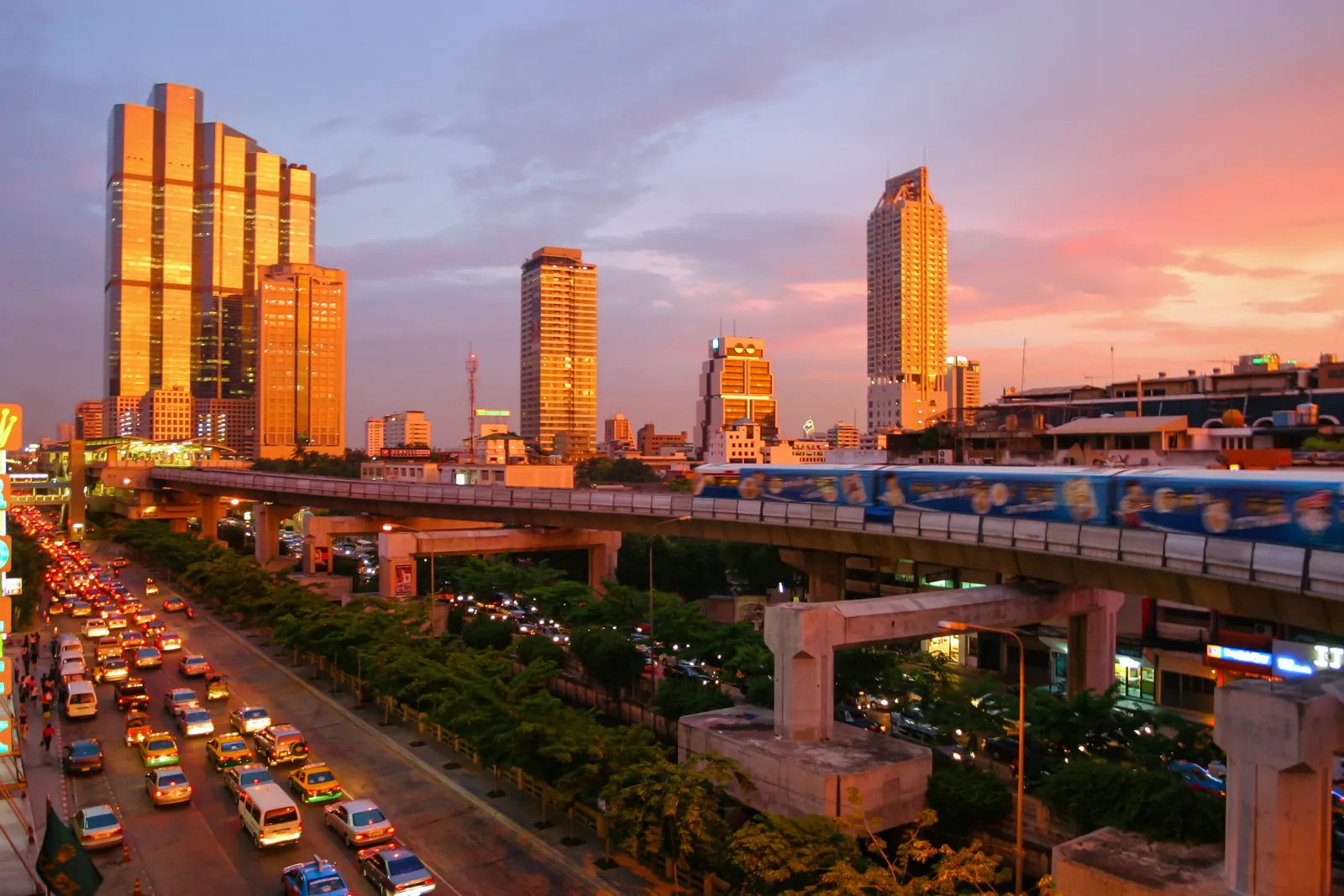
MRT is the underground, which reaches Chinatown (Wat Mangkon), the old city (Sanam Chai, for Wat Pho), Lumphini and Chatuchak. Similar hours and fares.
Grab is the ride-hailing app and the honest answer to most other journeys. Fixed price before you get in, cash or card, cars or motorbike taxis. A ten-minute ride is typically 80–150 ฿. Install it before you land.
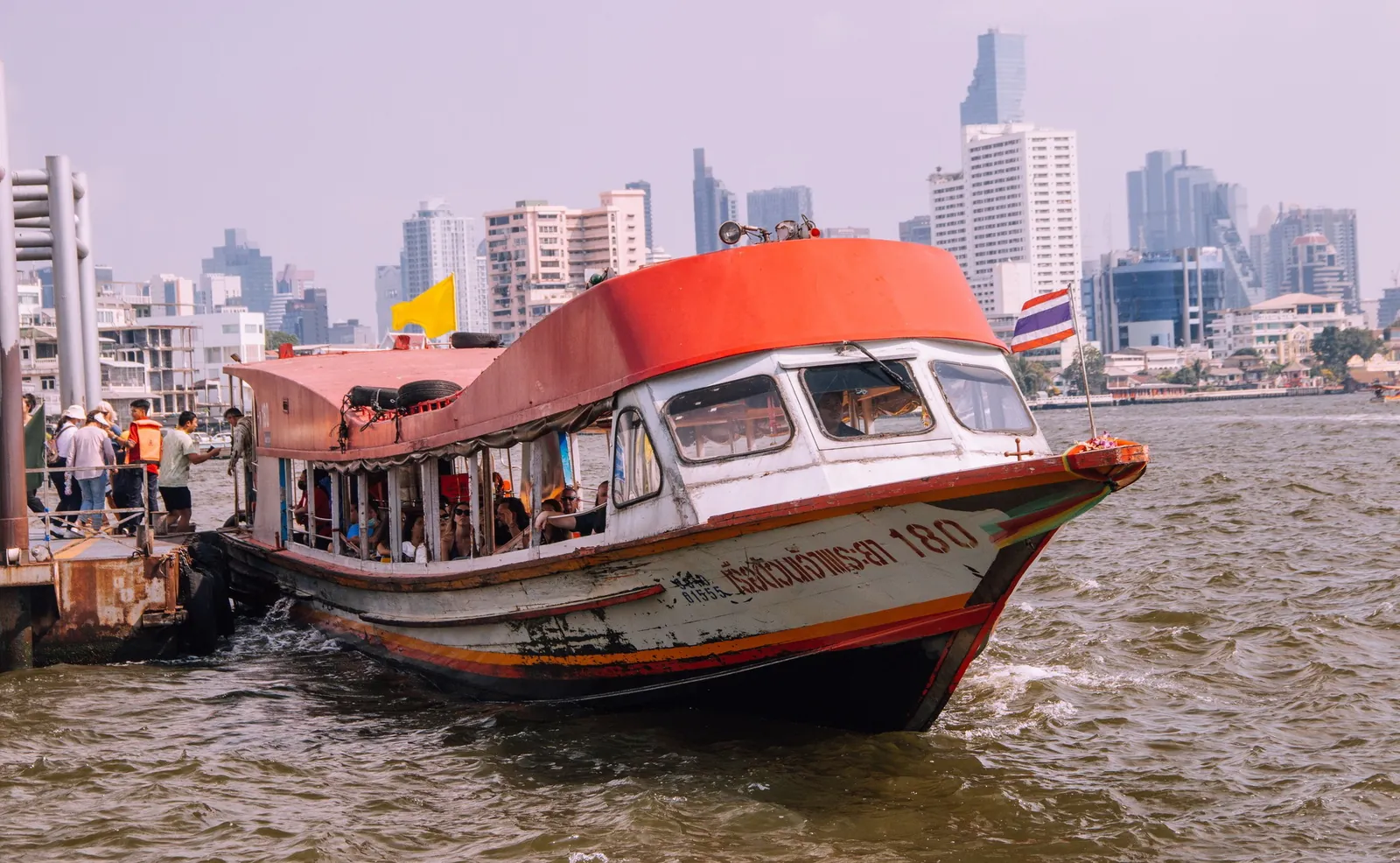
River boats are the best transport in the city and the cheapest sightseeing. The Chao Phraya Express (orange flag) stops at the piers for the Grand Palace, Wat Arun, Chinatown and Khao San for about 20 ฿ a ride; the tourist boat (blue flag) costs more and narrates. The khlong boats on the Saen Saep canal are a genuinely strange and useful way to cross the city east–west.
Tuk-tuks are for a five-minute ride you want a photo of. Agree the price first. Never for the "tour".
Walking works within a neighbourhood and not between them; pavements are broken, the heat is real, and the city is bigger than the map suggests.
Things to do alone in Bangkok
Here's the list I'd give a friend, roughly in the order I'd do them.
1. The three temples, early
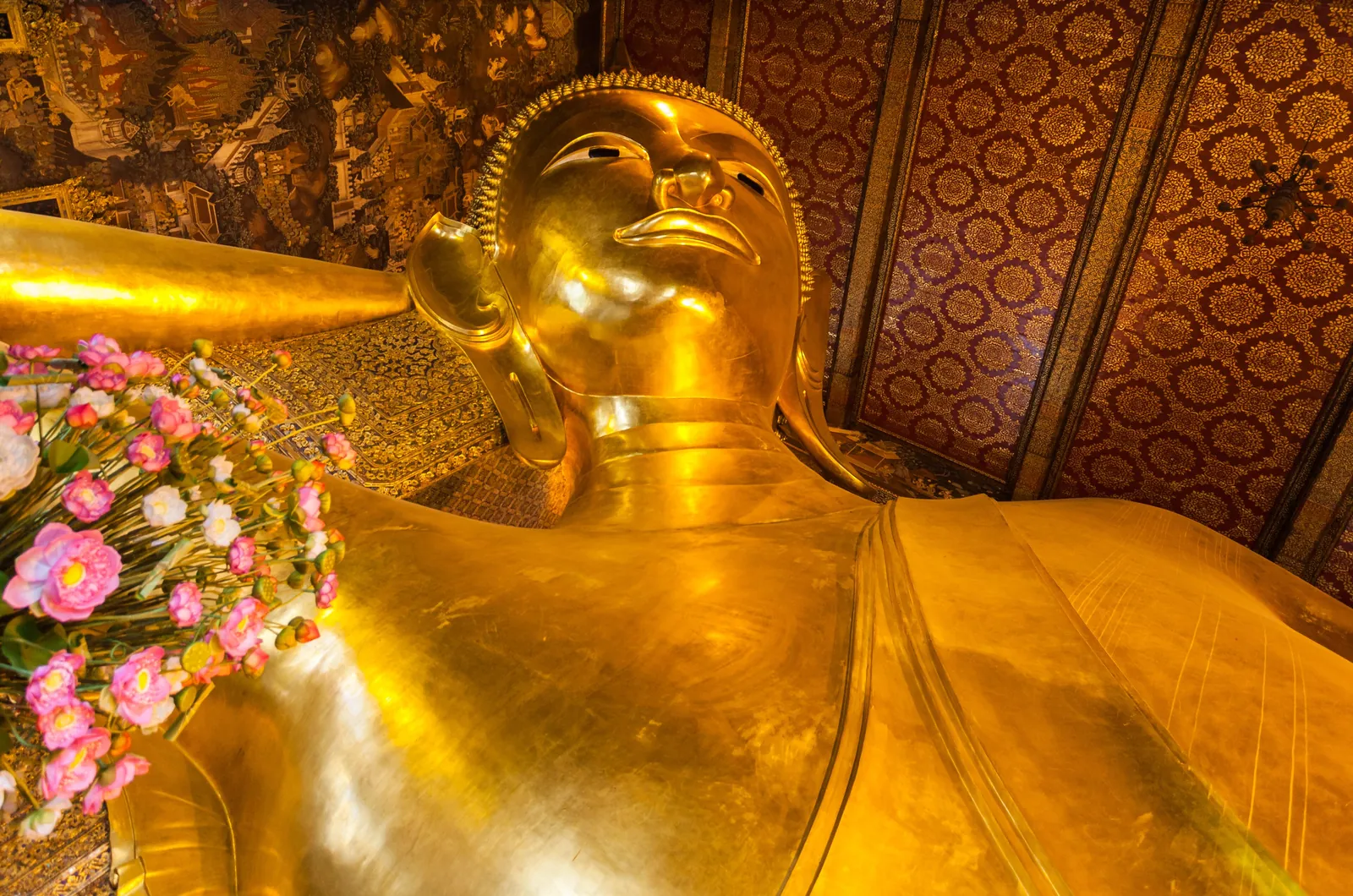
Wat Pho (the reclining Buddha, around 300 ฿), the Grand Palace (around 500 ฿, dress code enforced) and Wat Arun (around 200 ฿, across the river by a 5 ฿ ferry) sit within a kilometre of each other. Go at opening, 8am or 8:30, before the heat and the tour buses. Wat Arun is best in late afternoon light, so some people split them across two days.
2. Chinatown after dark
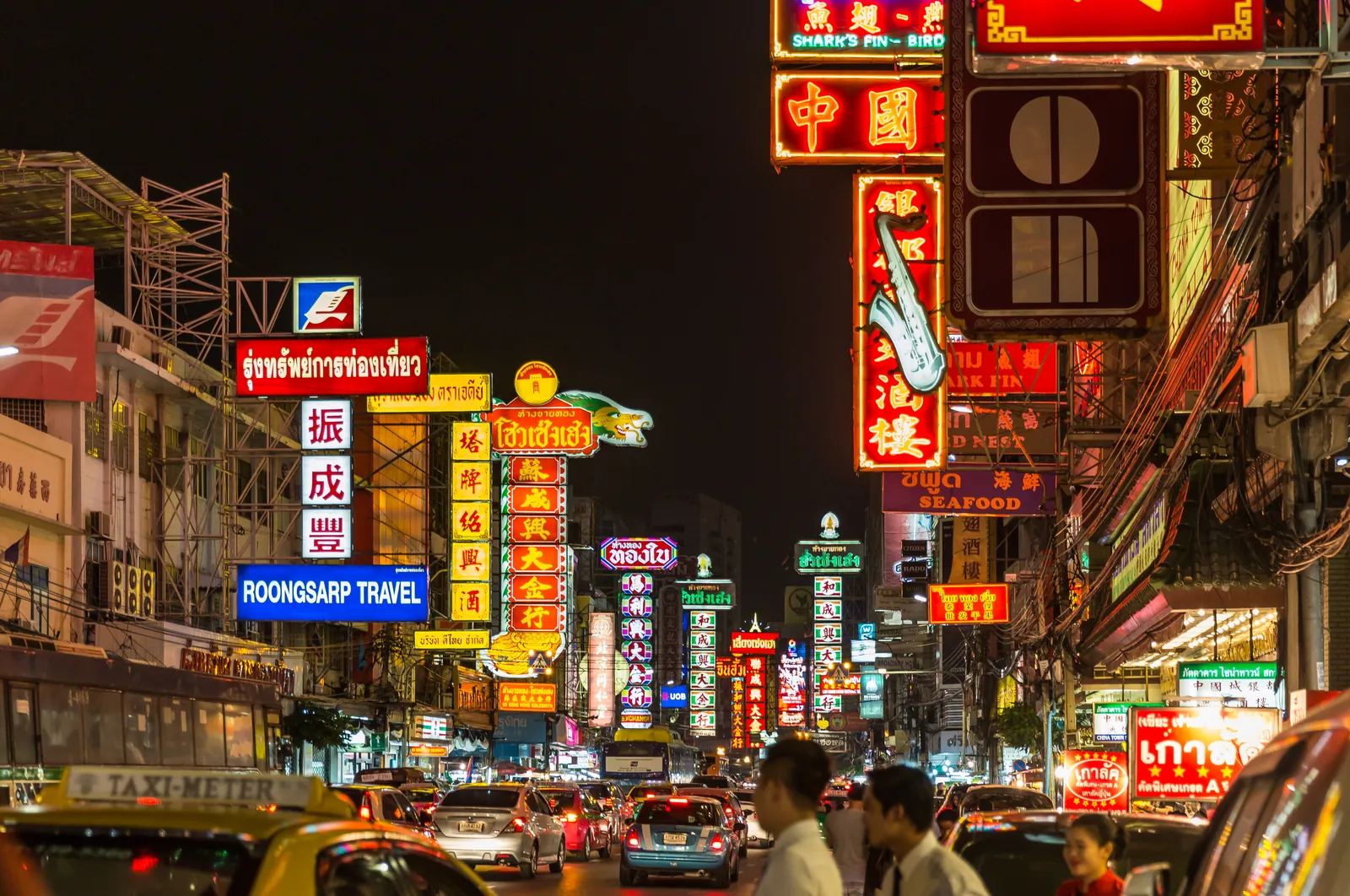
Yaowarat Road turns into one long line of food stalls from about six in the evening. Walk the whole road once before you eat anything, then work back. This is also the single easiest place in Bangkok to fall into conversation with strangers, because everyone is standing at the same stall wondering what the same thing is.
3. Lumphini Park at 6am
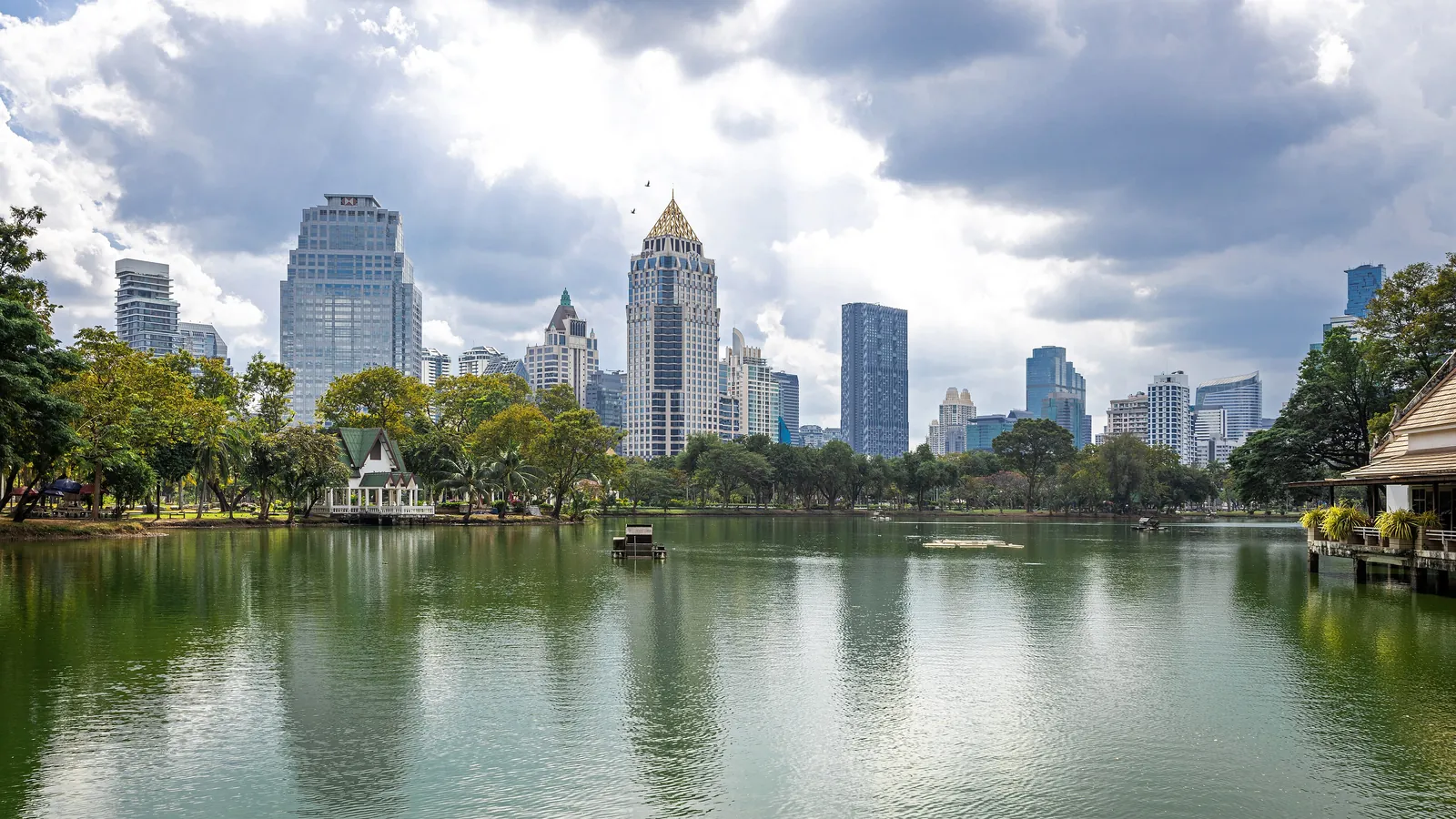
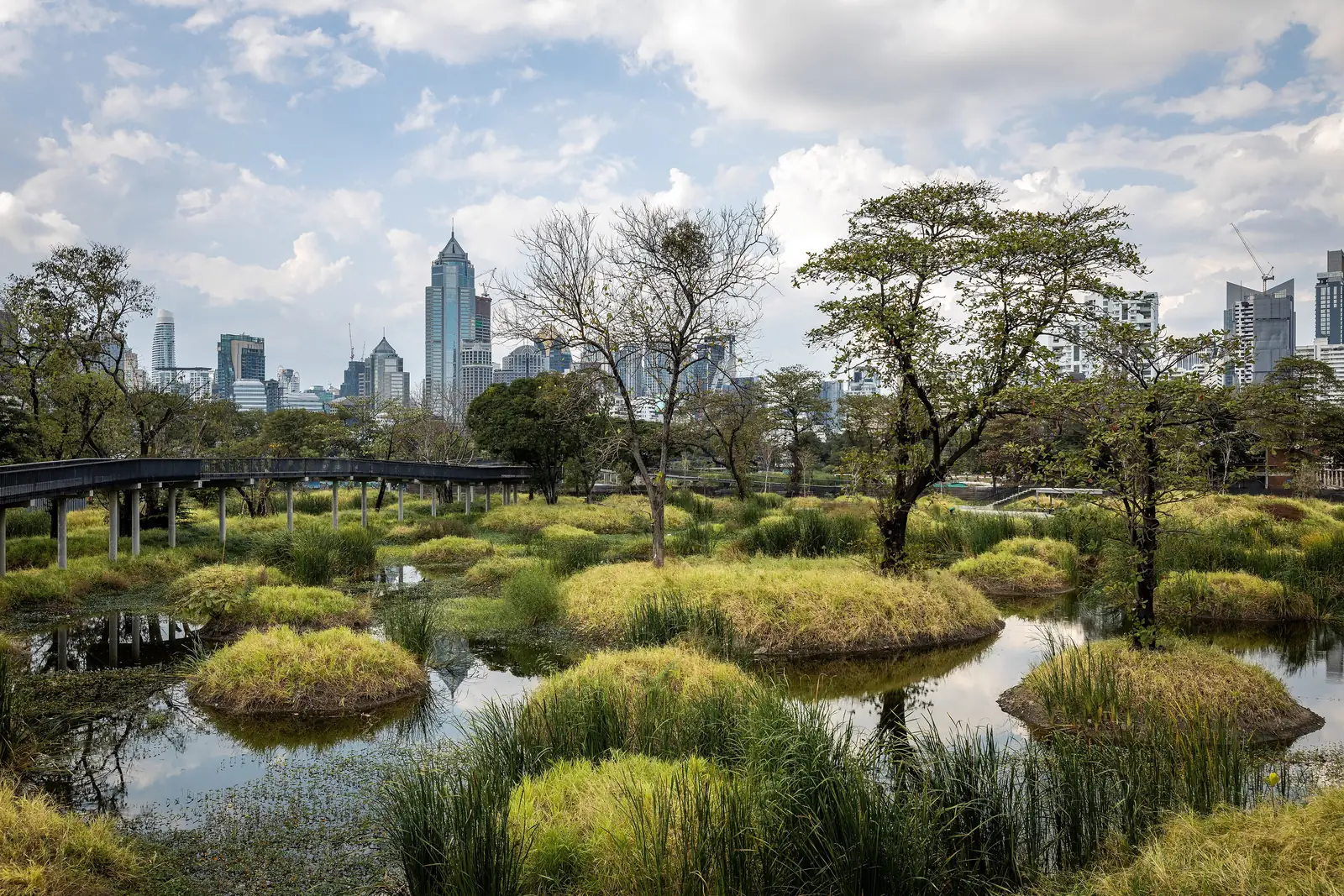
The runners, the tai chi groups, the aerobics class with the loudspeaker, and the monitor lizards, which are enormous and completely uninterested in you. Benjakitti Forest Park next door has a raised wooden walkway through wetland that has become the city's favourite running loop.
4. A street food tour, or just Old Town at lunch
The organised tours (around 1,000–1,500 ฿ for an evening) are worth it once, mostly because they put you at a table with six other people for three hours. If you'd rather freelance, the lanes around Sao Chingcha and Phraeng Phuthon in the old city are full of shophouse restaurants that have served the same dish for sixty years.
5. Chatuchak Weekend Market
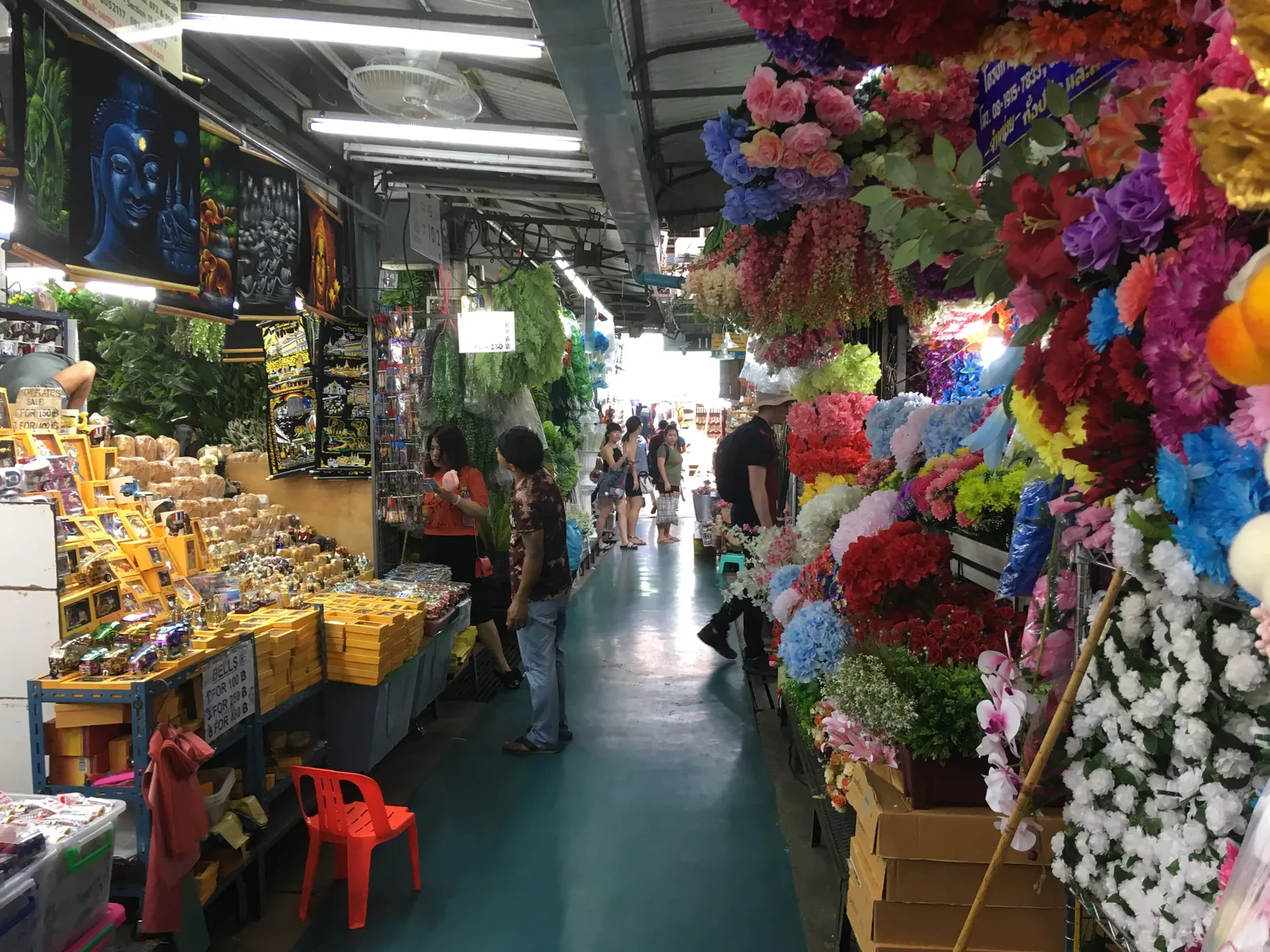
Saturday and Sunday, from BTS Mo Chit. Fifteen thousand stalls. Go early, plan to get lost, and eat at the food section in the middle. It is enormous, and honestly better with company, which is relevant later.
6. The river at sunset
Take the orange-flag boat from Sathorn pier (BTS Saphan Taksin) north to Phra Athit, and come back at dusk. Total cost: about 40 ฿. It beats any rooftop bar for value, though —
7. One rooftop bar
— you should do one rooftop bar. Expect 400–600 ฿ for a drink and a dress code at the famous ones; the smaller ones in Chinatown and on Rambuttri are a third of the price with most of the view.
8. Jim Thompson House
The silk trader's teak house and garden near BTS National Stadium. Guided tours only, about 200 ฿, quiet, and a good hour out of the sun.
9. A Thai massage
An hour of Thai massage is 250–400 ฿ almost anywhere; the school at Wat Pho is the famous one. Do this on day two, after the temples, when your feet need it.
10. Talat Noi and the riverside lanes
The old Chinese quarter between Chinatown and the river: street art, mechanics' workshops, a few of the best cafés in the city, and almost no tourists on a weekday.
11. A Muay Thai class, not a match
Watching a fight at Rajadamnern or Lumpinee is a good night (from around 1,000 ฿). But a drop-in beginners' class at a gym (500–800 ฿) is better value for a solo traveller, because you spend ninety minutes sweating next to the same six people, and that is how people meet.
12. A cooking class
Half a day, 1,000–1,500 ฿, usually with a market visit first. Every solo traveller I know who has done one has walked out with a shared lunch and other people's numbers. Book one for your first full day.
13. Day trips: Ayutthaya, or the train market
Ayutthaya, the old capital, is ninety minutes north by train (around 20 ฿ third class, which is fine) and best seen by rented bicycle. Maeklong Railway Market, where the stalls fold back for the train, is a half-day by minivan from the Southern Bus Terminal, or as part of a floating-market tour.
Eating alone in Bangkok
This is the section that decides whether you enjoy Bangkok on your own.
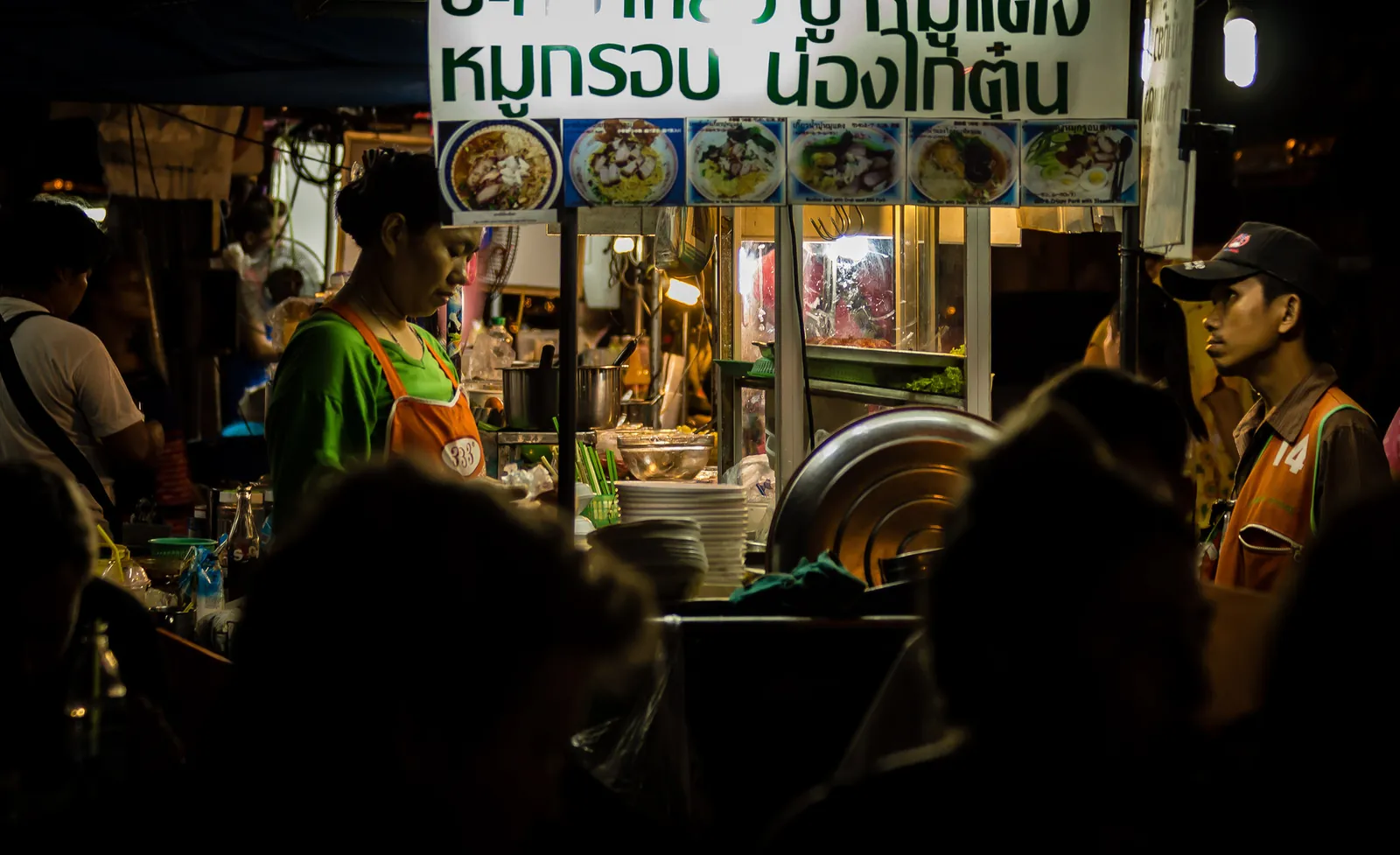
Street food is built for one. A plate of pad kra pao or a bowl of boat noodles is 50–80 ฿, there's no seating etiquette, and you can eat five things at five stalls in one evening. Food courts in the malls (Terminal 21's is the famous one) are air-conditioned, cheap and completely solo-friendly. Nobody in Bangkok thinks twice about a person eating alone.
But the food this city is really about — a whole fish, a curry, the som tam and the grilled chicken and the sticky rice — arrives in the middle of the table and is meant for four. A table of four orders six dishes and tries everything. A table of one orders one thing and looks at the menu with regret.
So the honest advice is: eat street food alone, and find people for dinner. Which brings us to the section this guide exists for.
How to meet people in Bangkok
Most guides give this one paragraph: "stay in a hostel, join a tour". Both work. Here is the fuller version, roughly from easiest to most rewarding.
Stay somewhere with a common room. A hostel with a bar or a courtyard, or a guesthouse on Rambuttri, is still the highest-probability way to have plans by tomorrow night. If you don't want to sleep in a dorm, book a private room in a hostel; you get the common room without the bunk beds.
Book one thing with a start time on day one. A cooking class, a food tour, a Muay Thai class, a bike tour of the old city. The activity is the excuse. Three hours next to the same people is what does the work, and the group usually goes for a drink after.
Use the parks. Lumphini at dawn and Benjakitti in the evening are full of people on their own doing the same thing you are. Run, and you'll see the same faces by day three.
Go where the tables are close. Rambuttri's cafés, the stalls of Yaowarat, the co-working cafés in Ari and Thonglor where every second person is a digital nomad who arrived last week. Chinatown in particular: stand at a stall, ask the person next to you what they ordered.
Say yes to the specific thing. When someone at the hostel says "we're going to Chinatown at seven", go, even if you'd planned something else. "We should hang out sometime" never turns into anything; "Chinatown at seven" does. I wrote a whole post about this: how to meet people in a new city when you know nobody.
Post the plan yourself. This is the one that feels exposed and works best. Most people in that hostel common room are waiting for someone else to suggest something. Be the person who says "Yaowarat at 7, meet at the lobby". You pick the time and the place, and a plan with a name on it fills faster than you'd expect.
And the app we built for exactly this. MeetMap is a map of small plans happening soon near you: a coffee at eight, a run at Lumphini, a table at Yaowarat with three seats left. Each pin shows the time, the place and how many seats remain; you take a seat and you're in the group chat. It's free to look, it's not a dating app, and it exists because every solo traveller has stood in a hostel lobby at 7pm hoping someone would say something. If the map is quiet in Bangkok when you open it, post the first plan — "Yaowarat, 7pm, four seats" — and see who turns up.
What Bangkok costs per day
Rough numbers, for one person, in baht.
| Budget | Mid-range | Comfortable | |
|---|---|---|---|
| Bed | 400 (dorm) | 1,500 (hotel) | 3,500+ |
| Food | 300 (street food) | 800 (mix) | 1,500+ |
| Transport | 100 (BTS/boats) | 300 (Grab) | 600 |
| One activity | 200 (temple) | 1,000 (class/tour) | 2,000 |
| Day | ~1,000–1,200 | ~3,500 | 7,500+ |
Cash still matters: street stalls, boats and some taxis are cash only. ATMs charge around 220 ฿ per withdrawal on foreign cards, so take out larger amounts less often.
A three-day Bangkok plan for one
Day 1 — Old city. Wat Pho at 8:30, the Grand Palace, ferry to Wat Arun. Lunch in the old-town lanes. Massage. Cooking class or food tour in the evening (book ahead). Sleep early; you'll be up at dawn on day two anyway.
Day 2 — River and Chinatown. Lumphini Park at 6:30, then breakfast at Sarnies or any Silom café. Jim Thompson House. Orange-flag boat north in the late afternoon, Talat Noi lanes, then Yaowarat for dinner from six. Rooftop bar if you have anything left.
Day 3 — A market and a neighbourhood. Chatuchak if it's the weekend; otherwise a morning in Ari. Afternoon at a Muay Thai class or Benjakitti Park. Last dinner with whoever you've met, or post one on the map.
Day 4, if you have it — Ayutthaya by train, or the railway market.
FAQ: solo travel in Bangkok
Is Bangkok good for first-time solo travellers?
It's the best city in Southeast Asia for it. Cheap, safe, easy transport, enormous numbers of other solo travellers, and a forgiving culture for people who don't know what they're doing yet.
Is Bangkok safe at night alone?
In the tourist and central areas, yes. Take Grab rather than walking a long way after midnight, keep your drink in sight, and avoid the "free show" invitations. That's the whole list.
Do I need cash?
Yes, for street food, boats, markets and some taxis. Cards work in malls, hotels and most restaurants. Take out a few thousand baht at a time to limit the ATM fee.
Is it easy to meet people in Bangkok?
Easier than almost anywhere, if you sleep somewhere with a common room and book one group activity on your first day. Harder if you stay in a hotel and eat alone every night. See the meeting-people section above.
How much English is spoken?
Enough. Hotel staff, tour operators and most restaurants in tourist areas speak it; street stalls and taxi drivers often don't, which is what Google Translate and the Grab app are for.
What should I not do?
Don't follow anyone who says a temple is closed. Don't get in a taxi that won't use the meter. Don't rent a scooter without photographing it. Don't disrespect the monarchy, ever, including in jokes. Don't touch anyone's head or point your feet at a Buddha image. Everything else, you'll be fine.
Last thing
Bangkok on your own is easy. Bangkok on your own every evening is a waste of Bangkok. Book the class, sleep near a common room, and when it's 7pm and nobody has said anything, be the one who does. The rest of this city takes care of itself.
