Home›Blog›How to make friends in Toronto when you've just moved there (2026)
How to make friends in Toronto when you've just moved there (2026)
The first thing people tell you about Toronto is that it's friendly. The second thing, usually about five weeks later, is that nobody has invited them anywhere. Both are true at the same time, and if you've just arrived you're about to find that out. What follows is what to do about it.
I've watched a lot of people land here — students in September, new immigrants in every month — and the pattern hardly varies. The city is polite almost to a fault. Doors get held. Someone on the streetcar tells you your bag is open. Then you go home and the phone stays quiet, because the people you met today have had the same friends since Grade 10 and their weekends are already full. Nobody's being unkind; they simply aren't short of people.
Except the enormous number who are. Not far off half of Toronto was born outside Canada, and the city is full of people who arrived in the last year with exactly your problem. Your job isn't to get into the closed circles. It's to find the open ones, and Toronto has built machinery for that: leagues that put a stranger on a team, run clubs with a bar afterwards, a free rink in front of City Hall, a park that fills every summer evening with people who came alone.
The other thing to know first: Toronto has two calendars. May to October the city lives outside and plans are easy. November to March it's dark at five and the plans move indoors, get smaller, and honestly get better. Most of you arrive in September: six weeks of the easy version before the hard one. Prices are in Canadian dollars, as of September 2026.
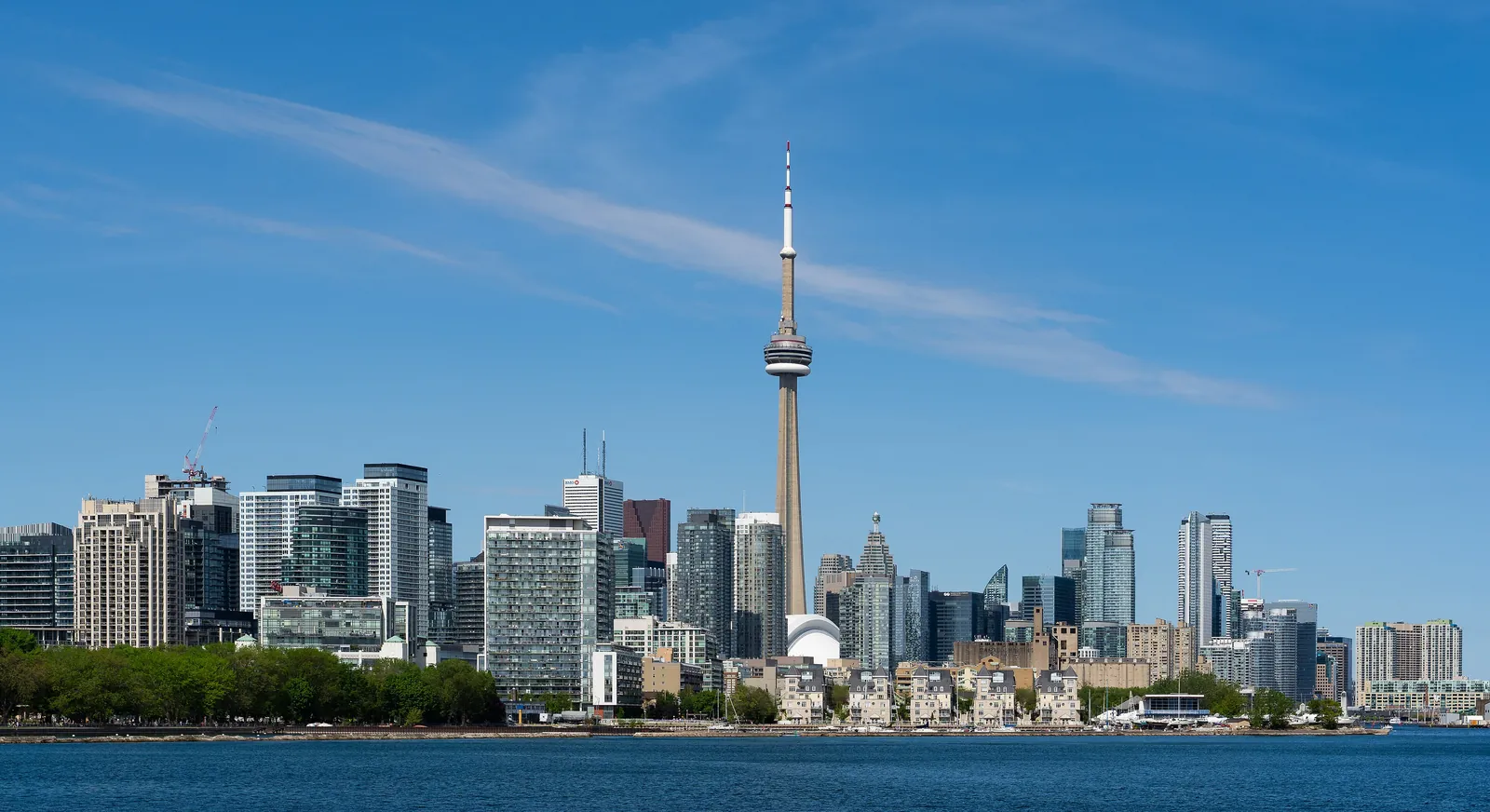
Toronto for newcomers at a glance
| How hard is it to make friends? | Harder than the friendliness suggests. Locals' circles are full; your first friends will be other newcomers, and there are a lot of them. |
| Cost of a social month | Around C$100–400 on top of rent and food: a league, free run clubs, a few skate or board-game nights, coffees. |
| Transit card | Presto (C$4) or just tap a bank card. C$3.30 a ride, two-hour transfer, free after 47 rides in a month. |
| The months that change everything | May (patios, Bellwoods, the ferry) and November (rinks, board-game cafés, indoor leagues). |
| The Chinese community | About 11% of the metro area; Markham is nearly half Chinese. A complete ecosystem in Markham, Scarborough, Richmond Hill, North York. |
| The one app | MeetMap — a map of small plans near you. Looking is free; if the map is quiet, post the first one. |
What Toronto is actually like socially
You'll hear it within a week: "Toronto is cold." Not the weather, the people. Here's what's actually going on. Toronto is a city of settled people. A lot of adults went to school in the suburbs, kept those friends, and now live forty minutes from them by car, so weekends are booked two weeks out. When they say "we should hang out sometime" they mean it warmly and it will never happen, because "sometime" isn't a slot in a full calendar. Add the geography — a friend in Mississauga and a friend in Scarborough are ninety minutes apart on transit — and socialising takes planning, and planning takes an existing relationship.
So it isn't about you. It's a scheduling problem, and it hurts the people who arrived alone most. What the "Toronto is cold" threads never reach is that the same forces produced a ridiculous number of structures for meeting people without an invitation: leagues, clubs, drop-ins, volunteer shifts, cafés where you pay a cover to sit with strangers. They exist because Torontonians needed them for themselves, and nothing stops you using them from your first week.
First-month practicalities
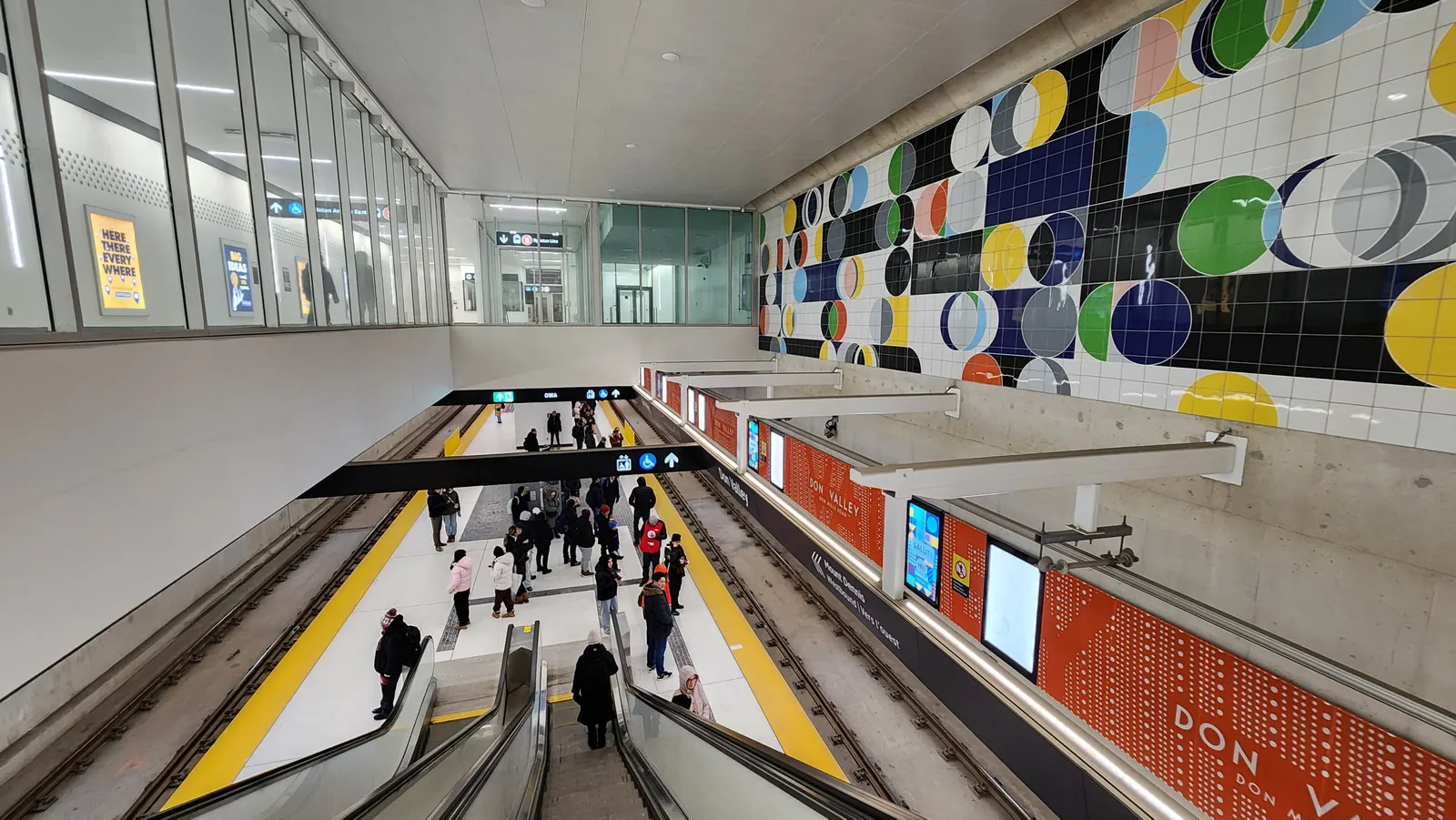
Transit. The TTC is subway, streetcar and bus on one fare: C$3.30 if you tap a Presto card or a bank card (C$3.35 cash, no transfer, so don't). A tap buys two hours of transfers, and since 1 September 2026 there's monthly fare capping: after 47 paid trips in a calendar month the rest are free, so transit tops out around C$155. The Presto card is C$4 at any station machine; students, get the post-secondary discount set on your card before you start tapping. The subway runs until about 1:30am, Blue Night buses after.
From Pearson. UP Express to Union: under half an hour, every 15 minutes, C$12.35 one way or C$9.25 with Presto. The cheap way is the TTC 900 bus to Kipling, then Line 2: one C$3.30 fare, an hour or more. Taxis are a flat rate downtown, around C$60–75; Uber usually comes in a little under that.
Phone, bank, SIN. Prepaid and no credit check: Public Mobile from about C$25–35 a month, Freedom or Fido from around C$35. Every big bank has a newcomer package — roughly a year without monthly fees and a credit card with no Canadian history, which you want because credit history is what rents you a flat later. Your SIN is free and same-day at Service Canada. Permanent residents and most work-permit holders get OHIP at ServiceOntario with no waiting period; international students pay UHIP through their university, around C$79 a month from September 2026 (up from C$66).
Where newcomers live, and what it costs. Rents softened through 2025–26. Rough one-bedroom averages: downtown core C$2,600, Liberty Village C$2,500, the Annex C$2,300, North York C$2,200, Scarborough C$1,900; studios around C$1,750–1,900 city-wide. Most people rent a room the first year: C$900–1,300 in a shared house, C$800–1,000 in Scarborough. The Annex, Harbord and Kensington are the U of T belt; TMU students spread across the east side of downtown; Yonge and Eglinton is where twenty-somethings with jobs end up; Willowdale (Yonge and Finch) is calm, cheaper, and full of Mandarin and Korean.
The scam that will find you. Toronto renters lose millions a year to rental scams, mostly condo sublets in Liberty Village or CityPlace with stolen photos and a landlord "abroad" wanting an e-transfer. Never pay for a place you haven't stood inside; in Ontario a landlord can ask for first and last month's rent and nothing else. The other one is the call from "the CRA" saying your SIN is suspended; the real CRA doesn't call like that. And buy your winter coat in October.
The seasons and what they do to your calendar
Toronto's weather isn't a detail. It decides what your social life looks like.
- December to March. Highs around 0°C, lows about -7°C, and a few weeks when the wind chill sits at -20 and the city stops going outside. Everything moves indoors and gets smaller: rinks, board-game cafés, indoor leagues, hockey on every screen. The hard season, and most of you hit it six weeks after arriving.
- April. Highs of 12°C, mud, and a collective giddiness the first day it passes 15°C. Patios open. People say yes again.
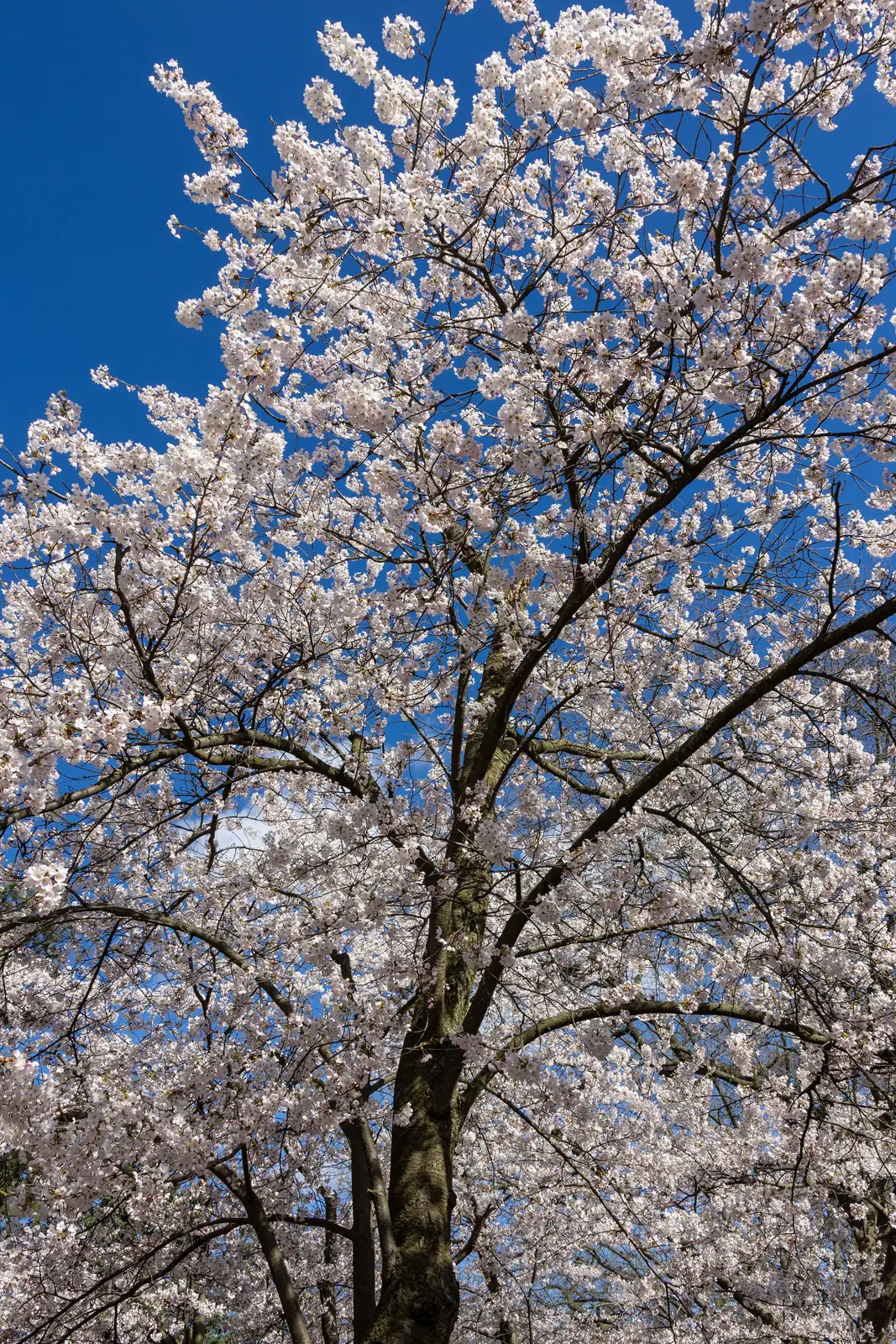
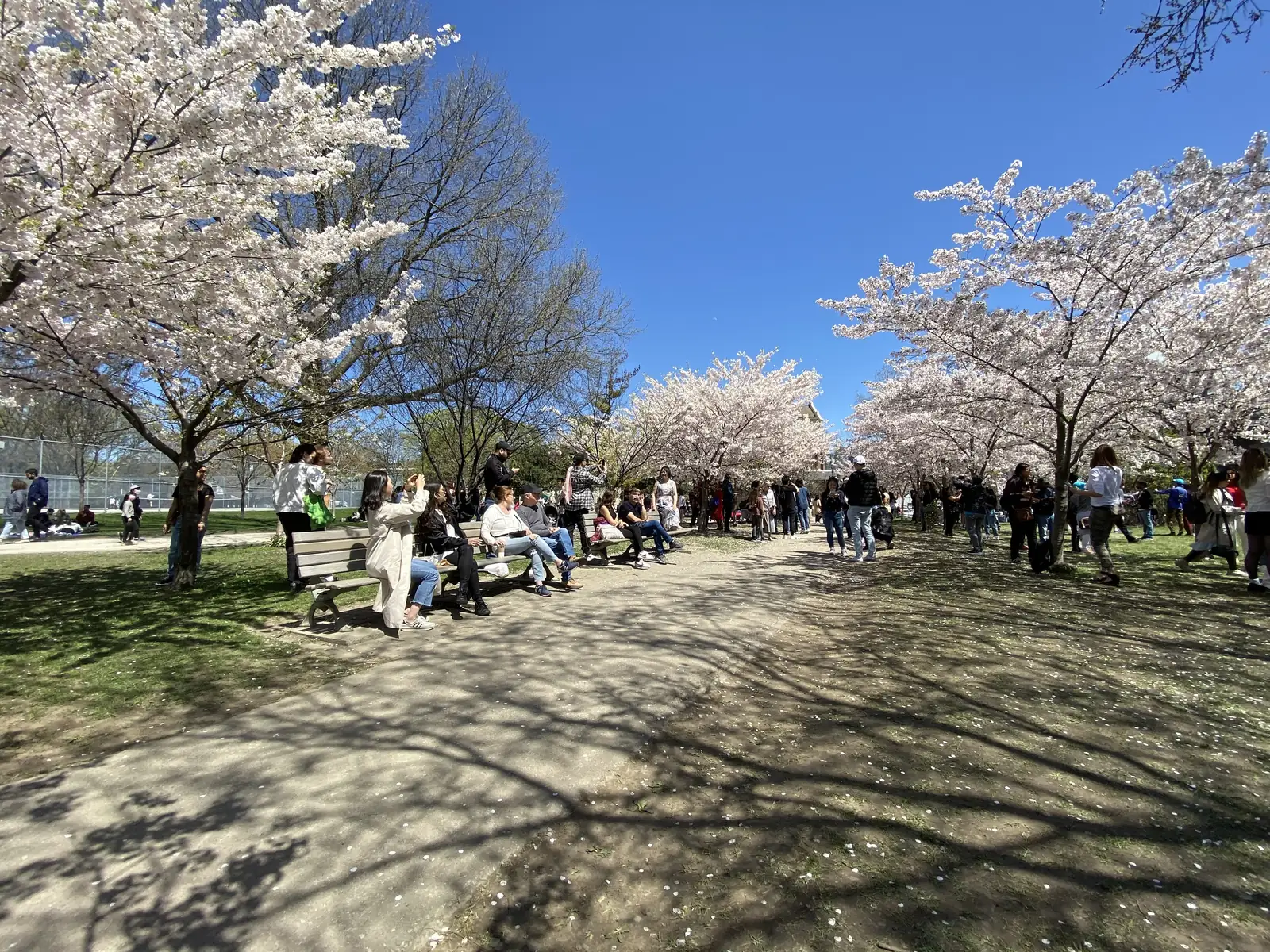
- Late April to mid-May. High Park's cherry blossoms peak for about a week somewhere between April 20 and May 10 and the whole city goes. Then the Centre Island ferries start and the Bellwoods evenings begin.
- June to August. Highs of 24–27°C and humid. Pride in June, the Caribbean Carnival parade on the August long weekend, the Islands, the Beaches. The easy season.
- September to October. The best weather of the year and the busiest calendar: TIFF, Nuit Blanche, fall leagues, every campus club recruiting. If you moved here in September, this is your window.
- November. Dark by 5pm. The rinks open at the end of the month. Whatever you set up in September is what carries you through this.
Ways to meet people in Toronto
Roughly ordered from "walk in tomorrow" to "takes some commitment", with what each costs and how you actually join. One rule covers all of them, and the Meetup and Luma listings too: choose things that recur, and go to the same one at the same time until people recognise you. A one-off mixer gives you a room of strangers and no reason to see any of them again.
1. Trinity Bellwoods on a summer evening
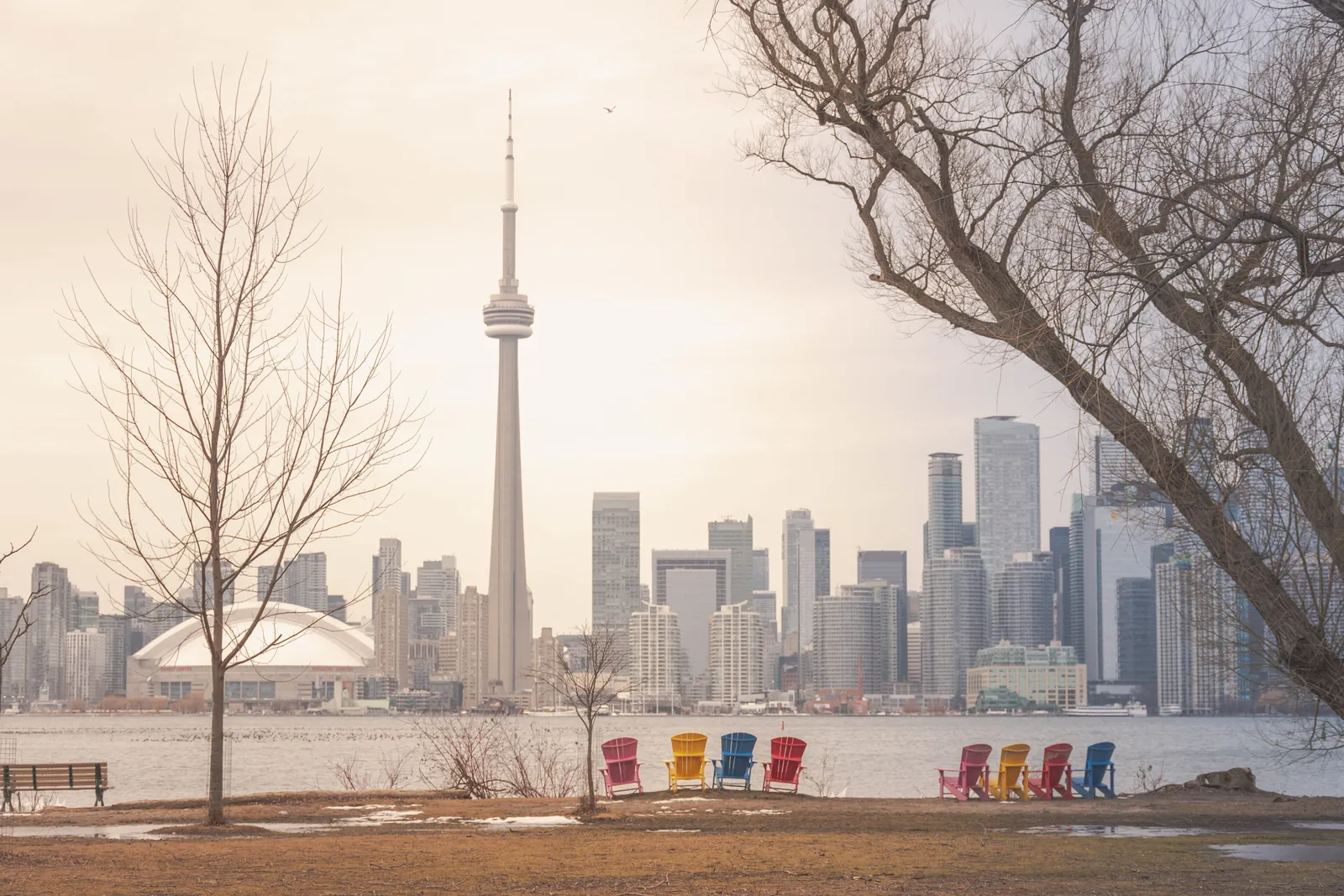
May to October, the lawn at Trinity Bellwoods (Queen West at Strachan, 501 streetcar) after about six on a weekday is the best free social space in the city. Half the people there came alone: a blanket, a book, something in a can that technically isn't allowed. Bring a blanket, sit near a group, borrow a bottle opener. There's a farmers' market on Tuesday afternoons. "Bellwoods at 6, bring a blanket" is the easiest plan anyone can post in Toronto.
2. The ferry to the Islands
C$9.57 return from the Jack Layton Ferry Terminal at the foot of Bay Street, ten minutes across, and you're somewhere with no cars, beaches, bike rentals and the skyline behind you. Centre Island and Hanlan's Point ferries run mid-April to mid-October; Ward's Island runs all year. Buy online and dodge the midday weekend queue. "Island ferry, Saturday 10, bringing a frisbee" fills every time. Go once alone, then start suggesting it.
3. Run clubs, free and everywhere
The fastest route into a group I know. You turn up, someone asks your pace, you run with the people who match it, and you go for a drink after. Nobody registers, nobody pays. Reliable ones: Frontrunners at Barbara Hall Park (519 Church St), Tuesdays and Thursdays 6:15pm; Bay Street Run Club from Bay and Wellington, Thursdays 6:15pm; Dupont Run Club (927 Dupont St), Wednesdays 6:45pm and Saturdays 9am; Portland Runners from the Ace Hotel, Wednesdays 6:30pm. Pick one and go three weeks in a row.
4. A rec league: sign up alone, get put on a team
Toronto's real answer to closed circles, and the one I'd push hardest. The Toronto Sport & Social Club (now branded JAM) and the Toronto Recreational Sports League run everything — volleyball, dodgeball, ultimate, soccer, ball hockey, beach volleyball at Ashbridges Bay in summer — and you register as an individual. They put you on a team, you play the same night weekly for eight to ten weeks, and the sponsor bar afterwards is where the team drinks. Roughly C$110–230 a season (TSSC's indoor softball was C$199 last winter). The invitation problem disappears because you're on the schedule. Fall leagues start in September, winter in January. If that's too much commitment, the OpenSports app lists pick-up basketball, soccer and volleyball for free to C$15, the beach courts at Woodbine are public, and the City's community centres run free drop-in swims, skates and gym times.
5. Climbing gyms
Bouldering is social by design: you sit on the mat between attempts next to someone trying the same problem, so you talk about it. Day passes are around C$28 at Boulderz in the Junction, Basecamp (Queen West and Bloor West) and Joe Rockhead's in Liberty Village; memberships run C$80–120 a month. Go on a weekday around 7pm when it's busy; the quiet Saturday-morning session is better for climbing and useless for meeting anyone.
6. Skating in front of City Hall
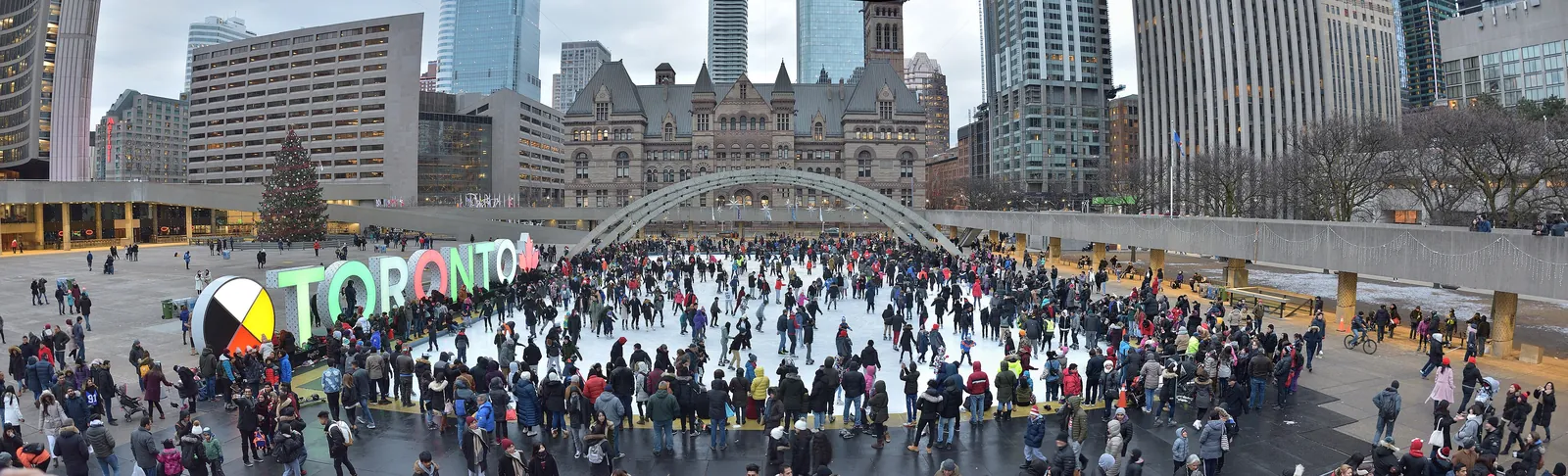
The rink at Nathan Phillips Square is free, open late November to mid-March, 10am to about 9:45pm, rentals C$15 for two hours. It's the best winter plan in the city because nobody can do it well, so everyone's holding the boards and laughing. Then something hot — ramen on Dundas, pho on Spadina — and that second half is where the friendship happens. The Bentway skate trail under the Gardiner is the other free one, and the City runs about fifty outdoor rinks, a few of which lend skates for free.
7. Board-game cafés
Snakes & Lattes on Bloor in the Annex (600 Bloor St W; another on College) charges C$20 game admission, which covers unlimited coffee, tea and pop and drops to half if you order something alcoholic, and for that you sit as long as you like with thousands of games and staff who'll teach any of them. The point is that four strangers get a legitimate reason to share a table for three hours. Tuesday is trivia night; go, tell the host you're alone, and you'll be placed. It's one of the few places in the city that's busier in January than in July.
8. A class you go to every week: improv, pottery, cooking
The subject matters less than the same eight people every Tuesday for two months. Second City's Improv 1 runs about eight weeks for around C$400 (C$395 this term): twelve terrified people once a week, and improv classes have a suspicious rate of producing friend groups. Studios like the Clay Room run six-to-eight-week pottery courses for C$250–400 and have wait lists. City Dance Corps on Queen West does drop-in salsa and hip-hop, no partner needed. Dish Cooking Studio and The Depanneur run classes where you cook and then eat at one long table. And if you want the one-night version, Choir!Choir!Choir! still teaches a few hundred strangers a pop song in two hours, no audition; it has outgrown its C$10 bar-night days and now plays ticketed rooms, so check its shows page for the next Toronto date.
9. The library
A Toronto Public Library card is free for anyone who lives, works or studies in the city, and it unlocks a hundred branches of free things: book clubs, English conversation circles, newcomer programmes, and settlement workers who sit in branches on set days and answer any question about living here. The Reference Library at Yonge and Bloor is also the city's best free coworking space, if you're job-hunting and going quietly mad in your room.
10. Volunteer at the festivals
Toronto runs on volunteers: TIFF in September (applications open months ahead, so look early; a shift with a small team and screening vouchers at the end of it), Nuit Blanche in early October, Pride in June, the Caribbean Carnival in August, Doors Open in May. Volunteer Toronto's site lists ongoing roles — food banks, community kitchens — if you'd rather have a weekly thing. A four-hour shift with a small team beats any party as a first conversation, because you have something to do with your hands.
11. Markets and Pedestrian Sundays
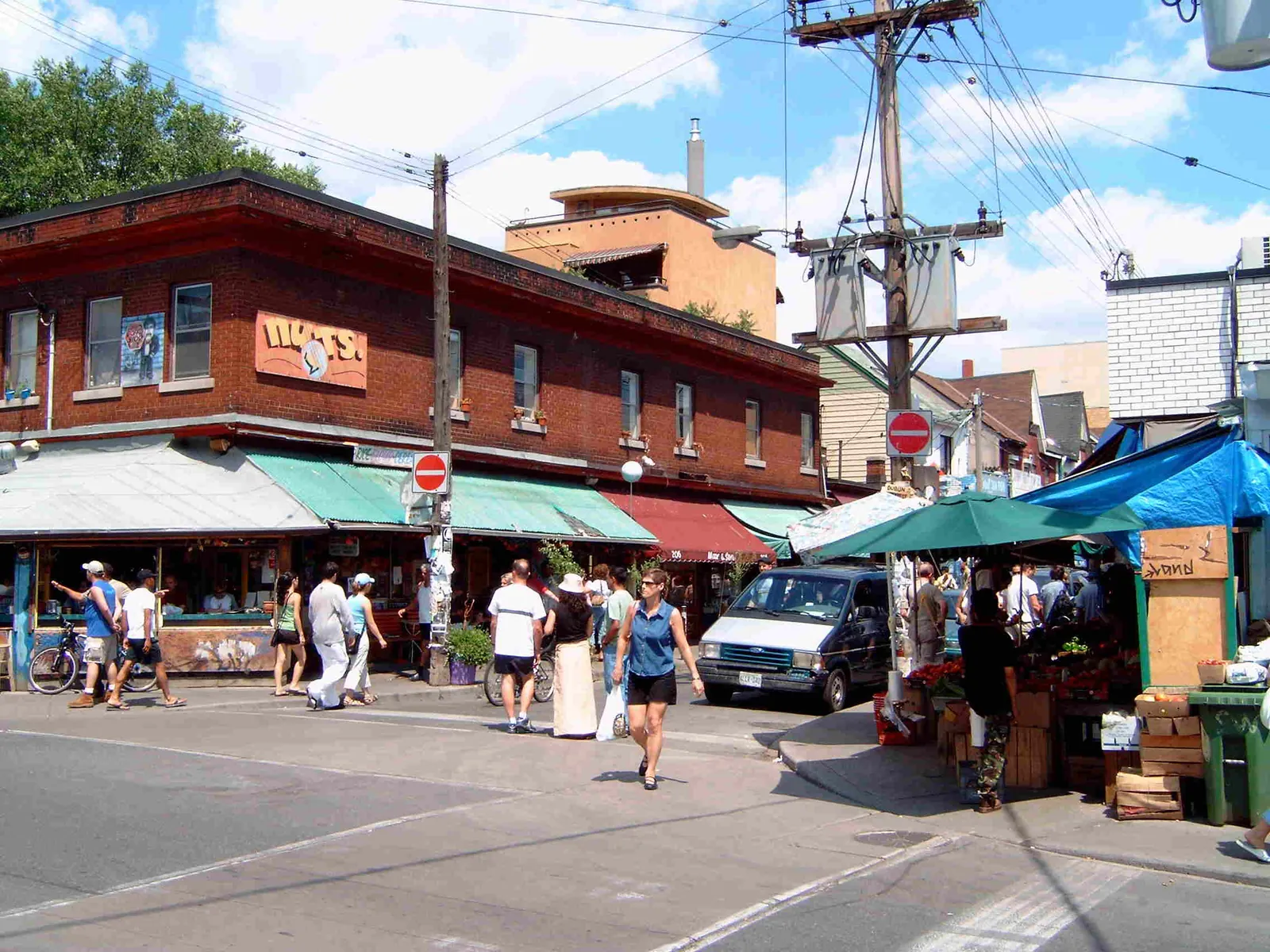
Kensington Market has the cheapest eating downtown and the people with the most time, and on the last Sunday of each month from May to October the streets close to cars, which is as close as Toronto gets to a street party. The Saturday farmers' market at Evergreen Brick Works in the Don Valley is the sociable one, with a shuttle from Broadview station; "Brick Works at 10, then the ravine trail" is a plan with a natural second half.
12. Students: the clubs fair, week one
Every campus holds a clubs fair in the first two weeks of September and it's the highest-value hour of your year. U of T has hundreds of clubs plus Hart House, which any student can use; TMU and York have their versions. Join two — one you already do, one that's a stretch — then go to the second meeting, because half the first crowd never returns and the ones who do become the club. The international student centres run coffee hours in September for people who know nobody.
13. Hiking, the ravines and the Bluffs
Toronto sits over a system of ravines, and you can walk for hours in the Don Valley without crossing a road. The Scarborough Bluffs (bus from Kennedy station) and Rouge National Urban Park (free, on the TTC) are the two half-day walks to do once. For company, the Toronto Bruce Trail Club runs member hikes most weekends, and the big Meetup hiking groups organise carpools to the escarpment, because the good hiking needs a car. In winter the same groups snowshoe.
14. Faith communities and hobby clubs
If you belong to a religion, this is still one of the fastest routes into a community: downtown churches run newcomer suppers and ESL classes, the mosques and gurdwaras do their own versions, and the Buddhist temples in Scarborough and Mississauga have volunteer days and vegetarian lunches open to anyone. Secular equivalents: Toastmasters has dozens of clubs (about C$100 for six months in head-office dues, plus whatever the club adds) and is excellent if spoken English is holding you back; the Toronto Bicycle Network runs group rides at every pace. Whatever your hobby is, search it with the word Toronto; the club will be there.
15. Language exchange, in both directions
The library's conversation circles are free and full of people in your position; the Meetup language-exchange nights, usually in a bar on Bloor or College, work on the sticker-on-your-shirt principle. What Chinese newcomers forget is that Mandarin is a currency here — plenty of Torontonians are learning it for work or a partner's family — and trading an hour of Mandarin for an hour of English on Tandem or a Meetup group gets you a weekly coffee with a local, otherwise the hardest thing on this list to obtain.
The Chinese community: use it, don't live in it
There are around 700,000 people of Chinese origin in the Toronto area, about 11% of the metro population, and in Markham it's close to half. This isn't one Chinatown; it's an entire parallel city, with its own malls, clinics, job boards and dentists.
The geography: the old Chinatown at Spadina and Dundas (Cantonese, older, where the students eat), East Chinatown at Gerrard and Broadview, Scarborough's strips around Sheppard and Kennedy, North York at Yonge and Finch (Mandarin, with Koreatown next door), and then the real thing north of Steeles: Markham, with Pacific Mall at Steeles and Kennedy, First Markham Place on Highway 7, a T&T on every second corner, and dim sum a class above anything downtown; and Richmond Hill. From downtown, take Line 1 to Finch and a Viva bus north, or the GO train from Union to Unionville, about 40 minutes.
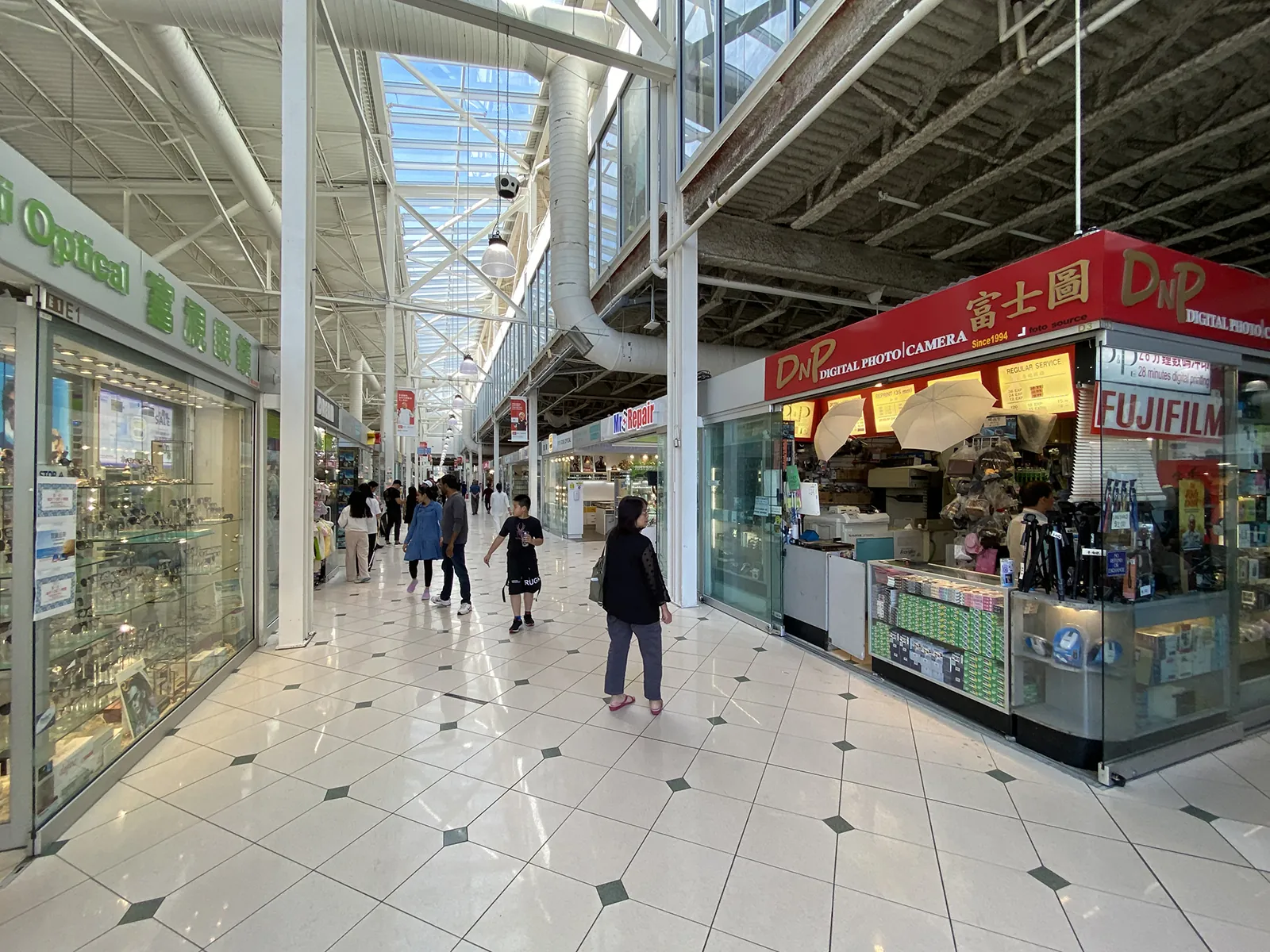
The honest version. This ecosystem makes your first month the easiest of any newcomer in the city. There's a WeChat group for your university, your building and your dentist. You can rent a room, find a job and file taxes without speaking English or meeting anyone who didn't grow up where you did. Use it — for the practical things, for the food, for the homesick days when you want a hotpot with people who get the jokes.
It is also, unchecked, a bubble in which the first month lasts a year. I've seen people three years in with no friends they didn't meet on WeChat, English no better than the day they landed, and a quiet sense of living in Toronto without being in it. What separates them from the ones who thrived is a rule about the ratio, made early. Mine: eat in Markham, make your Thursday plans downtown. Put one or two fixed weekly things — the run club, the league, the class — somewhere the room speaks English and nobody knows your hometown. You need both, and the second one doesn't happen unless you schedule it.
Two habits that turn rooms into friends
Everything above puts you in rooms with people. Turning rooms into friends comes down to two habits.
Treat an invitation with a time in it as rare, because here it is. In a city where every calendar is full, "we should grab coffee sometime" costs the speaker nothing and means about as much. The person who says "a few of us are doing Bellwoods Saturday, around two, by the tennis courts" has spent a slot on you, and slots are the scarce thing. For your first two months that sentence overrides whatever you had planned; you'll know four or five people by name before you've turned down anything. The longer argument is in how to meet people in a new city when you know nobody, and the shorter Toronto one in our first Toronto post.
Then spend a slot yourself. Three weeks into the run club you know six first names and nobody has suggested anything beyond the run, because each of them assumes the others are booked. That's your opening. Put a message in the group chat with a time, a place and food — "Skating at City Hall Thursday at 7, ramen after, who's in?" — and don't edit it for tone. What tends to happen: two say yes, one of them brings a flatmate, and you have a Thursday that exists because of you.
And the app we built for exactly this. MeetMap is a map of small plans happening soon near you: a coffee at eight, a run from Bellwoods, a dim sum table in Markham with three seats left. Each pin shows the time, the place and how many seats remain; you take a seat and you're in the group chat. Looking is free, it's not a dating app, and it exists because every newcomer here has spent a Friday evening scrolling for a reason to leave the flat. If the map is quiet in Toronto when you open it — it's new, it may be — post the first plan. "Island ferry, Saturday 10am, four seats." Then see who takes them.
If the first meeting is with someone from the app, make it the café or the rink rather than anyone's flat, and have your own way home. The safety page covers the rest.
What a social month costs
One person, Canadian dollars, rent and groceries separate.
| Frugal | Normal | |
|---|---|---|
| Rec league (a C$110–230 season, spread over its run) | 0 (pick-up only) | 60 |
| Run club, twice a week | 0 | 0 |
| Skating × 2 | 0 (own skates) | 30 |
| Board-game café × 2, admission (half price with a drink) | 40 | 50 |
| Coffees with people you just met × 8 | 40 | 50 |
| The drink after the league × 4 | 0 | 50 |
| Ferry to the Islands × 1 | 10 | 10 |
| A class, spread over its run | 0 | 80 |
| Month | ~C$90–100 | ~C$300–400 |
For scale: a room is C$900–1,300, a cheap restaurant meal about C$25, a pint around C$9, a gym about C$55 a month. Against those, the social line is the smallest number in the budget by some distance.
A first-month plan
Assuming you land in September. Shift it if you don't; the logic holds.
Week 1 — the boring week. SIM, bank appointment, SIN, Presto, a library card the same day. Walk Queen West from Spadina to Ossington one evening so you know where things are. Book nothing social except one run club, which you attend on Thursday whatever state you're in.
Week 2 — two recurring things. Register as an individual for a fall league; you'll have a team by the weekend. Clubs fair if you're a student, one class if you're not. Same run club again. Ferry to the Islands on Saturday, alone, so you can suggest it later with a straight face.
Week 3 — say yes to everything specific. The league starts; go to the bar after, even for one. Someone at the run club mentions Bellwoods on Sunday; go. Post one plan yourself, with a time, a place and a number of seats. Try one indoor habit before the weather turns.
Week 4 — set up the winter. Sign up for the winter league before the fall one ends. Find your nearest free rink. Decide your Markham ratio and write it down. By now you should know four or five names and have one plan you didn't make. If not, a recurring thing fell off. Put it back.
FAQ
Is Toronto a hard city to make friends in?
Harder than its manners suggest, easier than its reputation. Locals' circles are full, so your first friends will be other newcomers, and nearly half the city was born abroad. Use the structures that need no invitation — leagues, run clubs, classes, drop-ins. People who join two recurring things in month one have friends by month three.
How do international students make friends in Toronto?
The clubs fair in the first fortnight, a rec league or intramural team, and one habit off campus — a run club or a board-game night — so your friends aren't all from your programme. If you're Chinese, decide early how much of your week lives in Markham and the WeChat groups.
Is Toronto safe at night and on the TTC?
Yes, by any big-city standard. Downtown and the main neighbourhoods are fine to walk late; the subway runs to about 1:30am and Blue Night buses after that, and after 9pm anyone riding a bus alone can ask the driver to be let off between stops (the TTC's Request Stop programme). The hazards that actually get newcomers are a -20 wind chill in the wrong coat and streetcar tracks under a bike tyre. The scams that reach newcomers are financial, not physical.
How much does it cost to live in Toronto as a newcomer or student?
A room C$900–1,300, a studio around C$1,750–1,900, a one-bedroom C$1,900–2,600 by neighbourhood. On top of rent, a single person spends roughly C$1,400–1,500 a month on everything else, of which the social month above is C$100–400. Transit caps at about C$155.
Which neighbourhoods are best for young newcomers?
The Annex and Harbord for U of T; the east side of downtown for TMU; Yonge and Eglinton if you have a job and want a lively, safe, slightly expensive base; Willowdale for Mandarin around you and a cheaper room. Wherever you live, the social centre of gravity is Queen West to Bloor, so stay within one transit ride of it.
Do I need good English to make friends in Toronto?
No, but you need to use the English you have. The city is so multilingual that accents are the norm and nobody flinches. Run clubs and leagues need almost no talking; the library circles exist for practising. Your English improves in exact proportion to how many of your weekly plans happen outside the Chinese community.
Before the rink opens
Nobody in Toronto is going to notice you're new and come and collect you; the city is kind, but it's busy, and it assumes you have people already. So don't wait to be noticed. Register for the league on your own, go back to the same run club three Thursdays in a row, fall over in front of City Hall with a group you met a fortnight ago, and put one plan of your own on the calendar before the end of October. Do that much, and when the rink opens at the end of November the argument will be about which ramen place, not about whether anyone is coming.
