Home›Blog›How to make friends in Vancouver when you've just moved there (2026)
How to make friends in Vancouver when you've just moved there (2026)
The first thing anyone tells you about Vancouver is that it's hard to make friends here. They say "the Vancouver freeze" the way they'd say "atmospheric river", as if it were weather, and it half is. I wish I could say the reputation is exaggerated. It isn't, quite. People here are warm in the moment and then they go home. A colleague will chat happily with you at lunch every day for six months and never once suggest a Saturday.
What the reputation leaves out is where the city's social life actually happens, which is outside. Nobody here makes friends in bars, or not many. They make them on the stairs up Grouse Mountain at eight on a Saturday, on the seawall at seven on a Tuesday, in the doughnut queue at Deep Cove, in the lift line at Seymour on a Wednesday night. The invitations Vancouverites don't extend at dinner parties, they extend with a trailhead and a time.
And if you've arrived from China, there's a third thing, which is Richmond. The Chinese side of this city is so complete (malls, banks, dentists, a WeChat group for every apartment tower) that you can land on a Tuesday and have a working life by Friday without a word of English. A real gift in the first month and, left unchecked, a very comfortable cage for the first year.
This guide is the long version of all three. Every figure is in Canadian dollars and was checked in September 2026. Vancouver prices move; if a number below looks a little off by the time you read it, assume the direction was up.
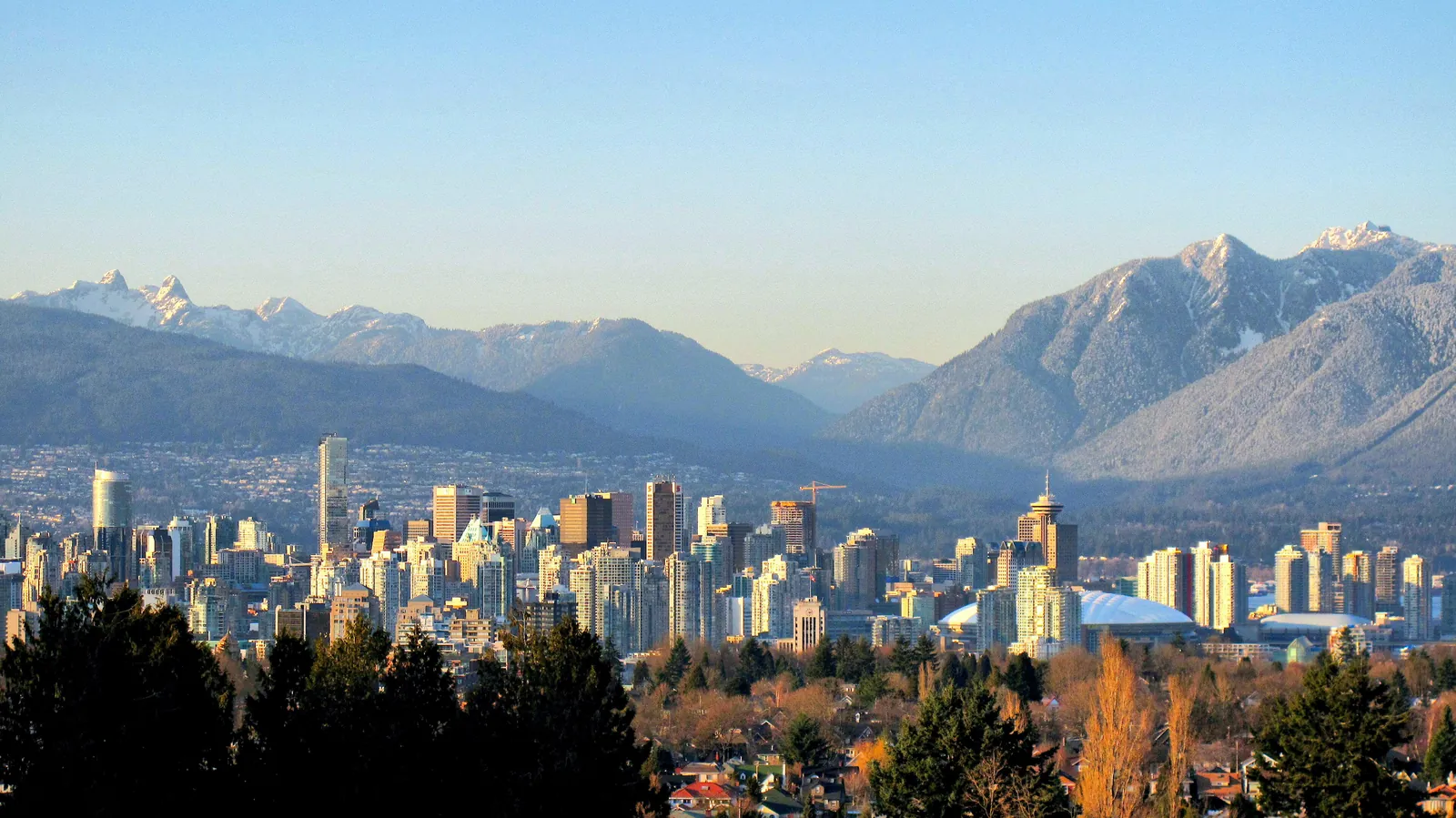
Vancouver in one table
| How hard is it to make friends? | Genuinely hard. A third of residents told the Vancouver Foundation in 2012 that it's difficult to make new friends here; by 2017 it was half. It's invitations that are missing, not people. |
| Why | Five months of rain, a city of renters who move every couple of years, and a politeness that stops just short of "come round on Saturday". |
| Cost of a social month | Around C$400–700 on top of rent if you're careful. The best things (trails, seawall, beaches) are free. |
| Transit card | Compass card, C$6 deposit. C$2.85 a ride in one zone, C$117.20 a month. Or just tap a bank card. |
| The months that change everything | May, when the Grind opens and the patios come out. November, when the rain starts and everyone goes indoors. |
| The Chinese community | Richmond is 54% Chinese; about one in five people across the metro. Use it; don't live entirely in it. |
| Apps | Meetup to find the groups; MeetMap to find who's out tonight (more below). |
What Vancouver is actually like, socially
Let me be fair to the city before I'm hard on it. Vancouverites are not cold. The person at the bus stop will talk about the rain, the barista will know your order by the third visit, someone on the trail will point you to the viewpoint you missed. Nobody is rude and nobody is in a hurry.
What it doesn't do is follow up. Two people can have a good hour, part with "we should do this again", and both know neither will text. The Vancouver Foundation has been measuring this for years: in its 2012 survey a third of residents said it's difficult to make new friends here, and by the 2017 follow-up (3,785 people) that had grown to half, with one in four alone more often than they'd like and 14% lonely often or almost always. Both times the worst numbers belonged to people under 35 and to the lowest-income households. That's you, probably, or close.
Why? My theory, for what it's worth: a lot of people arrived recently themselves and are heads-down on rent. Half the city rents and moves every two years, so investing in a neighbour feels like a bad bet. The rain hides everyone for five months. And there's a West Coast politeness that treats an unsolicited invitation as slightly forward. None of it is about you. Nobody looked at you and decided against it; people here mostly don't do the deciding at all.
Which is the upside. A shortage of invitations is something you can fix on your own. A stranger who says "Quarry Rock Sunday at nine, doughnuts after" is doing something so ordinary in Vancouver that nobody finds it odd, and quite often three people say yes. Most of this guide is a list of places where that sentence works.
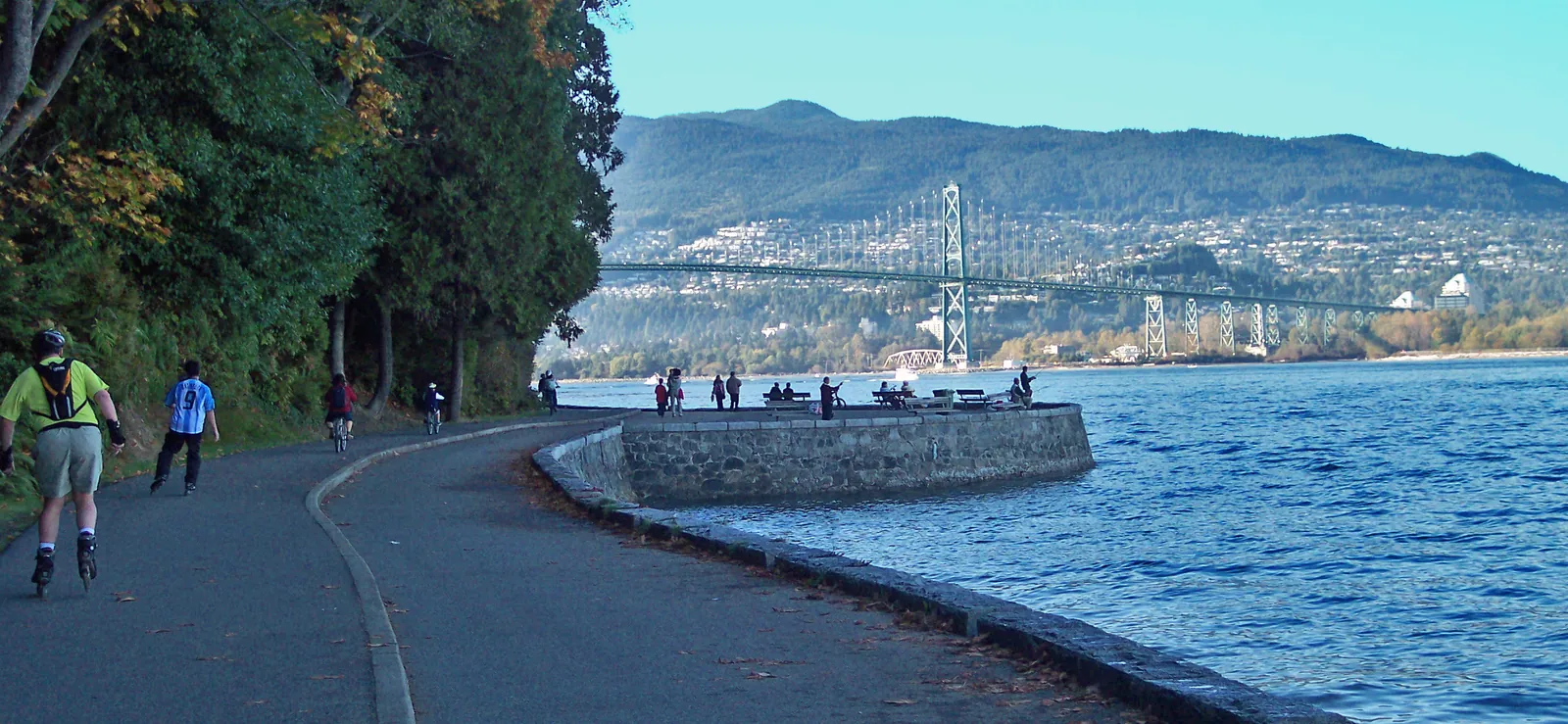
First-month practicalities
Short, because the settlement agencies will tell you all of this at length, free, in Mandarin if you want.
Transit. A Compass card (C$6 refundable deposit) from any SkyTrain station or London Drugs; load stored value, tap in and out. Since the July 2026 fare rise a ride is C$2.85 in one zone, C$4.20 for two, C$5.40 for three; a one-zone monthly pass is C$117.20, three zones C$211.65. After 6:30pm on weekdays and all weekend the whole system counts as one zone, which quietly makes evening plans cheaper. Or tap a bank card or phone at the gate and pay the C$3.50 single fare. Last SkyTrains leave downtown around 1:15am, except Sundays, when it's nearer 12:15.
From the airport. The Canada Line does YVR to Waterfront in about 25 minutes. Trips starting at the airport carry a C$6.50 AddFare (monthly-pass holders skip it), so budget C$10–12. A taxi downtown is a flat zone rate of roughly C$40; an Uber usually C$25–45.
SIM. The discount brands are fine: Public Mobile and Freedom both sell plans around C$35 for 25–50 GB (the data buckets change every few weeks; the prices barely move), Fido and Koodo a little more. Budget C$35–50 a month. PhoneBox sells eSIMs to newcomers before they land, no credit check.
Bank and paperwork. SIN at a Service Canada office in week one; free, usually on the spot. Every big bank has a newcomer package, typically no monthly fee for the first year and a credit card without Canadian credit history, so walk into the nearest branch and say "newcomer". BC's health plan (MSP) has no premium but a wait of up to three months, so buy travel cover for the gap; international students pay a C$75-a-month health fee on top.
Where newcomers and students live, and what it costs. Rent decides your month. Unfurnished one-bedrooms in spring 2026 averaged around C$2,400 downtown and in the West End, C$2,200 in Kitsilano and C$2,800 near UBC, against a metro-wide average nearer C$2,050; Burnaby and New Westminster save C$400–800 on downtown, Surrey more. A room in a shared house is C$1,000–1,500, a basement suite C$1,500–2,000. Students cluster in Kits and Point Grey (UBC), around Metrotown and Burnaby Mountain (SFU, BCIT) and along the Canada Line in Richmond; young professionals in Mount Pleasant, the West End and off Commercial Drive. If you can possibly afford it, live on the Vancouver side of the water; the freeze is worse when everyone you meet is fifty minutes from your bed. And never pay a deposit for a place you haven't walked into: fake laneway-house listings were the scam of the year.
The seasons and what they do to your calendar
Vancouver has two real seasons and a couple of transitions, and your social life follows them whether you plan to or not.
November to March. It rains. Not violently, just constantly: around 175 mm in November at the airport (more downtown), twenty wet days in December, dark by half past four. The city goes indoors, to the breweries on Main Street, the board-game tables, the ramen queues on Robson, the climbing gyms, and up the hill, where all three North Shore mountains run night skiing under lights. The Polar Bear Swim at English Bay on New Year's Day and the Lunar New Year parade in Chinatown are the two big outdoor days. This is the season you have to make plans on purpose, and the one this guide is really for.
April to May. Cherry blossoms from late March (there's a festival), the Sun Run 10K in April with tens of thousands in it, and the Grouse Grind reopening, late April in a normal year (the snowless winter of 2026 had people on it by February). Patios appear on the first warm afternoon and everyone is suddenly outside, slightly stunned.
June to September. The reason people put up with the rest. Barely 35 mm of rain in July, highs around 22°C, light until nine. Kits Beach after work, Spanish Banks at sunset, the Folk Festival at Jericho in mid-July, the PNE fair from late August, a farmers' market every weekend. (The Celebration of Light fireworks are gone, cancelled indefinitely; the city put on a single free night at English Bay in 2026 instead, so don't plan a summer around them.) Arrive in summer and you'll make friends faster than at any other time and wonder what the freeze talk was about. Give it until November before you decide.
October. Golden, short, the film festival. Then the rain.
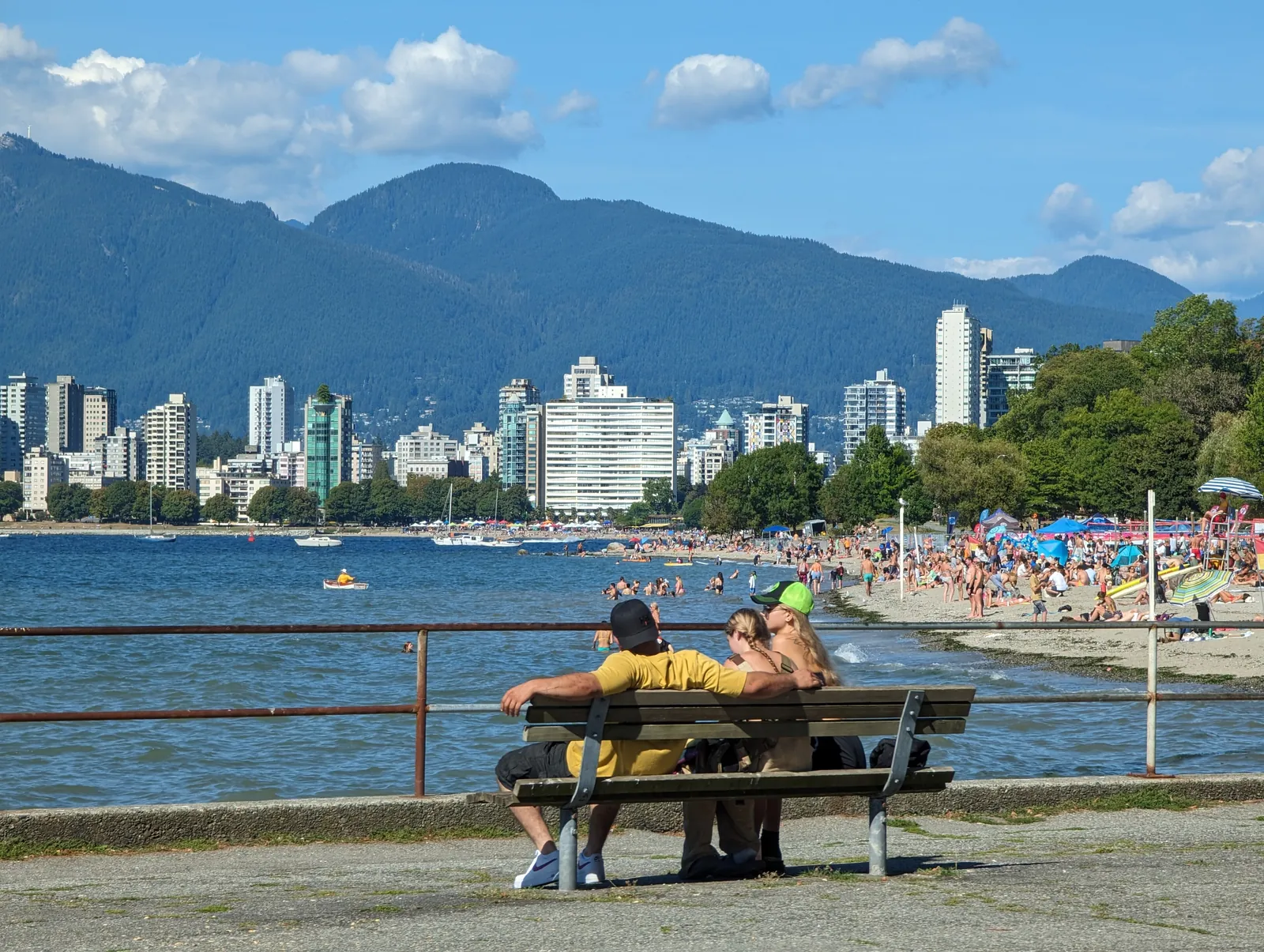
Ways to meet people in Vancouver
Eighteen, roughly from easiest to most committed. Nearly all are free or close to it, which in this city is not a small point.
1. The seawall, at the same time every day
Stanley Park's seawall is about nine kilometres round the park, flat all the way; the full False Creek loop adds Kits, Granville Island and Science World. Walk or run it at the same hour on the same days. By week two you're nodding at people; by week four you know the woman with the two whippets. It doesn't feel like much while it's happening, but nearly every friendship here is built on that layer. Free; the Aquabus across False Creek is C$4–8 if you want to shortcut.
2. The Grouse Grind, and the coffee after
2.5 km, 800 m of climbing, 2,830 stairs, the city's favourite fitness test. It's a regional park trail, free to climb, open roughly spring to October (late April in a normal year) from 7am; you can't walk down, so the gondola at the top is C$20. SeaBus to Lonsdale Quay, then the 236 bus. "Grind Saturday 8am, coffee after" is the most ordinary invitation in Vancouver, and the coffee, not the stairs, is where the talking happens. The 7am crowd are regulars; aim for them.
3. Quarry Rock at Deep Cove
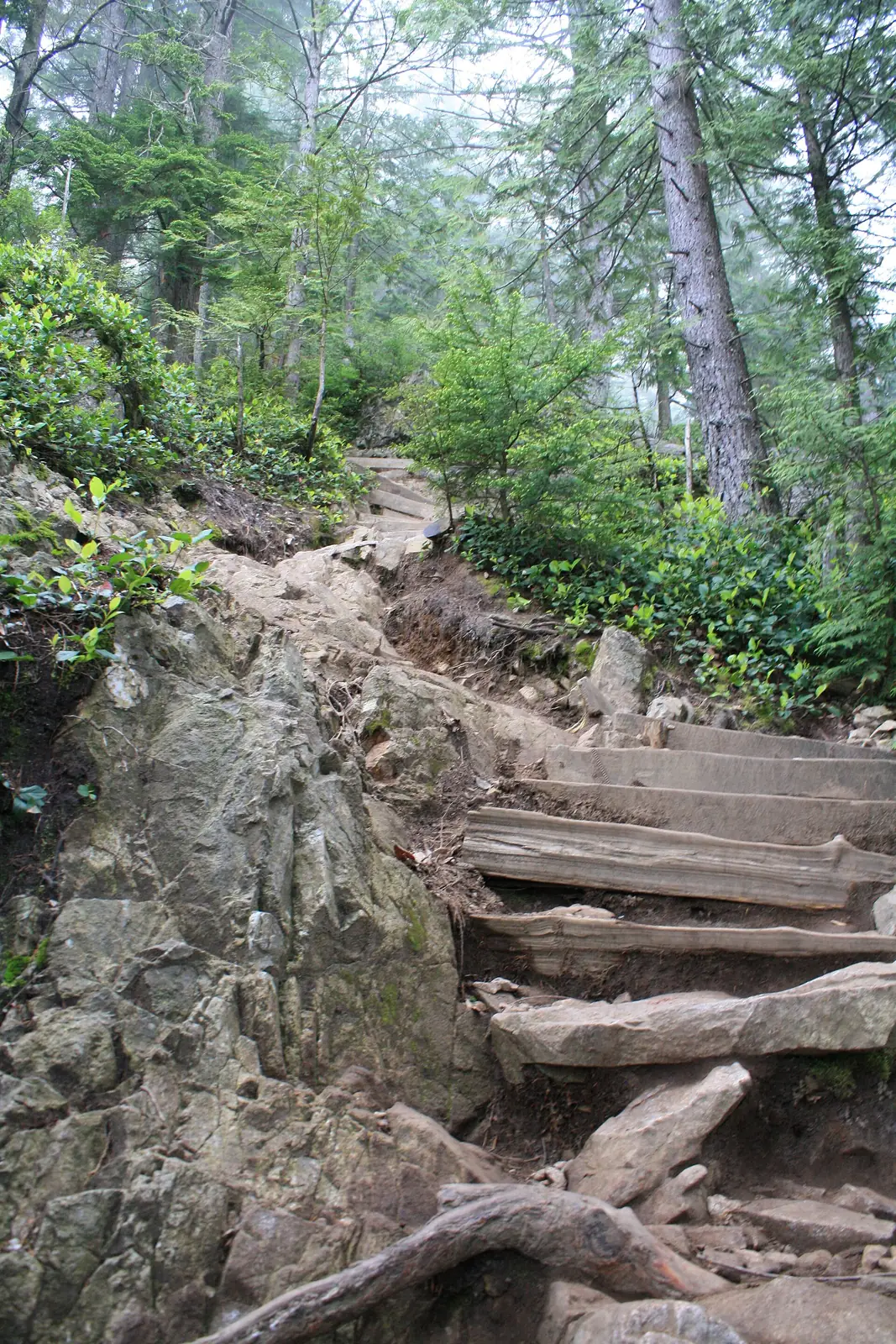
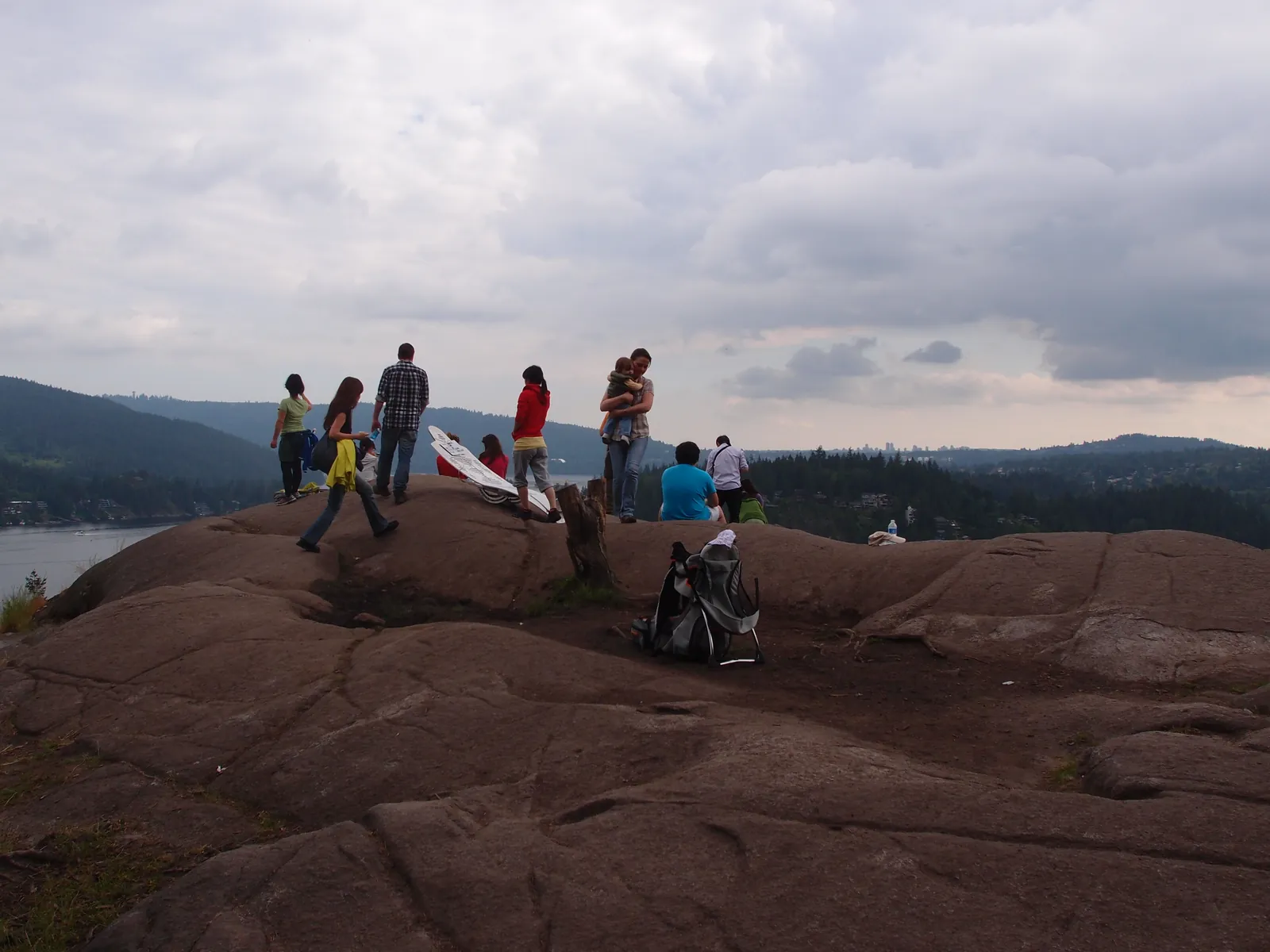
The gentler classic: 3.8 km return, 100 m of climbing, an hour and a half, a rock over the inlet at the end, and Honey Doughnuts on Gallant Avenue when you're back down. SeaBus, the 239 to Phibbs Exchange, then the 212 to Deep Cove. It's the hike to propose to people who say they "don't really hike", which is half the newcomers you'll meet, and the doughnut queue is a social event on its own. Weekends fill by ten.
4. Wanderung
A free email list with over 3,600 subscribers where anyone can post "Garibaldi Lake Saturday, leaving 7am, two seats in my car" and anyone can reply. Around 200 trips a year go out this way: hikes, snowshoeing, cross-country skiing, cycling. You split petrol and bring your own kit. Read the FAQ first (they're strict), and join something small before you organise. Without a car this is how you get past the North Shore to the real mountains.
5. A run club
Run clubs are the fastest friend-making machine in the city: weekly, free, same forty people. Social Run Club and Striderz are beginner-friendly; Vancouver Frontrunners is the LGBTQ+ club, Wednesday evenings and Saturday mornings; East Van Run Crew does a Tuesday night; the Lululemon stores host their own. Instagram has this week's start point, usually a café, and the coffee after is the point. Enter the Sun Run in April (10 km, C$55–71 depending on how early you sign up) and you have a reason to keep turning up through the wet months.
6. Bouldering at The Hive
Climbing gyms are where the indoor social life went when pubs got expensive. The Hive has two gyms on Industrial Avenue (bouldering and ropes) and one on the North Shore; a day pass is C$32, a month C$195. You'll be talking to strangers inside ten minutes, because everyone watches everyone fail on the same problem and it's impossible not to comment. Weeknights after six are busiest and friendliest.
7. A rec league you join alone
Urban Rec runs basketball, dodgeball, volleyball, indoor soccer, floor hockey, pickleball and softball across the metro, and plenty of players register alone: pick the sport, the night and your level, and they put you on a team. Seasons run eight to ten weeks at roughly C$100–150 a person (check current prices). The Vancouver Ultimate League does the same for ultimate: solo players go on its Matchmaker list and captains with a gap pick them up, and there are learn-to-play clinics. A weekly game is eight guaranteed evenings with the same people, and most teams go to a pub after.
8. The ski hills on a weeknight
Cypress, Seymour and Grouse are 30–45 minutes from downtown and all three run night skiing. Seymour is cheapest, weekday tickets from around C$49 and weekends up to about C$94, with a winter shuttle from Rupert SkyTrain station (around C$15–20 return); Grouse is around C$82 a day; Cypress is the dearest, from around C$96 on a weekday and nearer C$118 at weekends, or C$389 for a Bronze pass that covers Friday-to-Sunday evenings, 5pm to 10pm, minus a few holiday blackouts. A Wednesday on Seymour costs less than dinner out, and the lift line is a conversation whether you want one or not.
9. Beach volleyball at Kits and Spanish Banks
From May the courts at Kits Beach and Spanish Banks fill after work, and pick-up games are open to anyone who stands near the net looking willing; Urban Rec runs a beach league if you'd rather have a roster. Bring water, there's no shade. It's the most straightforwardly friendly scene in the city, partly because everyone is in a good mood on a beach at seven on a July evening, and partly because a game of six needs a sixth.
10. Board-game nights
The old board-game pubs have mostly gone (Storm Crow closed, still mourned), so the scene lives in Pizzeria Ludica on Keefer Place near Stadium–Chinatown, a thousand-odd games and no cover as long as everyone orders something; in open-play nights at Rain City Games; and in a dozen Meetup groups, of which Vancouver Board Games and the New West gaming group are the big ones. Turn up alone. Board-game people will hand you a rulebook within a minute.
11. Farmers' markets and the Public Market
Trout Lake on Saturdays and Kitsilano on Sundays are the farmers' markets that feel like a neighbourhood, spring to the end of October, with winter versions at Riley Park and Kits; Granville Island Public Market runs daily. Neither is a place to make a friend outright. They're places to become a regular, which in Vancouver is the same thing done slowly: same hour, same stall, ask what's good this week.
12. Community centre drop-ins
The community centres are the cheapest social infrastructure the city has. A free OneCard from the Park Board gets you drop-in swims, gym sessions and skating for around C$7–8, and the programme guides list badminton nights, pottery, table tennis and adult-beginner everything. Kits Pool, the outdoor saltwater one, is a summer institution. Book a six-week class rather than dropping in; six Tuesdays with the same twelve people is how a class becomes a group chat.
13. Language exchange and the library
A language exchange night (search Meetup for "language exchange"; BlaBla has run one here, and there are always two or three going) is the easiest room in the city to walk into alone, because tables rotate by language and arriving on your own is the premise. Free or a few dollars. A library card is free and the Vancouver Public Library runs free English conversation programmes at several branches; the settlement agencies (ISSofBC, MOSAIC, SUCCESS) run more, plus job and housing help, all free. If you speak Mandarin it works in reverse too: plenty of locals want practice.
14. Clubs Days, if you're a student
UBC's AMS Clubs Days in September is a fair with 350-odd clubs, most a few dollars to twenty to join; SFU and Langara run their own. Join three, go to each once, keep one. The Varsity Outdoor Club (cheap yearly membership, cabin trips, genuinely beginner-friendly) is the best single thing on that campus for a newcomer. The wider point: UBC is a 55,000-student bubble a bus ride from the city, and four years can pass inside it.
15. Volunteer for a weekend
The Stanley Park Ecology Society runs invasive-species pulls most weekends; the Greater Vancouver Food Bank always needs sorters; the film festival in October and the Folk Festival in July run on hundreds of volunteers who get free tickets and a crew. GoVolunteer.ca lists the rest. A four-hour shift next to the same two people produces more real conversation than any networking event I've been to here.
16. A faith community, if that's you
Churches, temples, gurdwaras and mosques are some of the fastest-working social networks in the city, and the one kind of place where somebody asks your name and remembers it next week. Chinese-language congregations across Richmond and Burnaby, the International Buddhist Temple on Steveston Highway, big English-speaking churches like Tenth in Mount Pleasant, the gurdwaras of Surrey. Go once, stay for the tea afterwards.
17. A coworking space, or the same café every day
If you work remotely, a desk in a basement suite is the freeze in its purest form. HiVE on Hastings sells a day pass for C$48 plus tax, the WeWorks downtown are in the same range, and both run the occasional social; cheaper is one café (JJ Bean, Matchstick, whichever is on your street) at ten every morning. Two weeks of that and the other regulars start talking to you, because you're a regular now.
18. Meetup, Bumble BFF and the WeChat groups
Meetup is still the directory: hiking groups, photo walks, the philosophy salon, Silent Book Club, a free salsa night, the "new in Vancouver" groups that meet on Thursdays; Luma has the tech and startup meetups if that's your world. Bumble BFF works better here than in most cities because so many people are new. The Chinese WeChat groups (租房, 拼车, 徒步) are useful and, for reasons I'm about to get to, dangerous in bulk. Use all of them to get a time and a place. None of them is a place to hang out.
The Chinese community: Richmond, and the bubble
If you've come from the mainland, Hong Kong or Taiwan, here's the honest version.
Richmond, one Canada Line ride south of downtown, is 54% Chinese by the 2021 census, and close to half its residents grew up speaking Cantonese or Mandarin. Aberdeen Centre is joined to Aberdeen station by a walkway; Parker Place, Yaohan Centre and the Richmond Public Market food court are minutes away along No. 3 Road; Alexandra Road is a whole street of restaurants that locals just call Food Street. Across the river, Crystal Mall by Metrotown in Burnaby is the other great food court, and the old Chinatown on Pender and Keefer has the Storytelling Centre, the Dr. Sun Yat-Sen garden (around C$16; the park next door is free) and the city's best egg tarts. About one in five people across the metro is of Chinese origin.
One piece of bad news: the Richmond Night Market by Bridgeport station, running in one form or another since 2000 and on this site since 2012, closes for good on 20 September 2026; the lease ran out and the land is slated for development. If you're reading this in time, go on its last weekend.
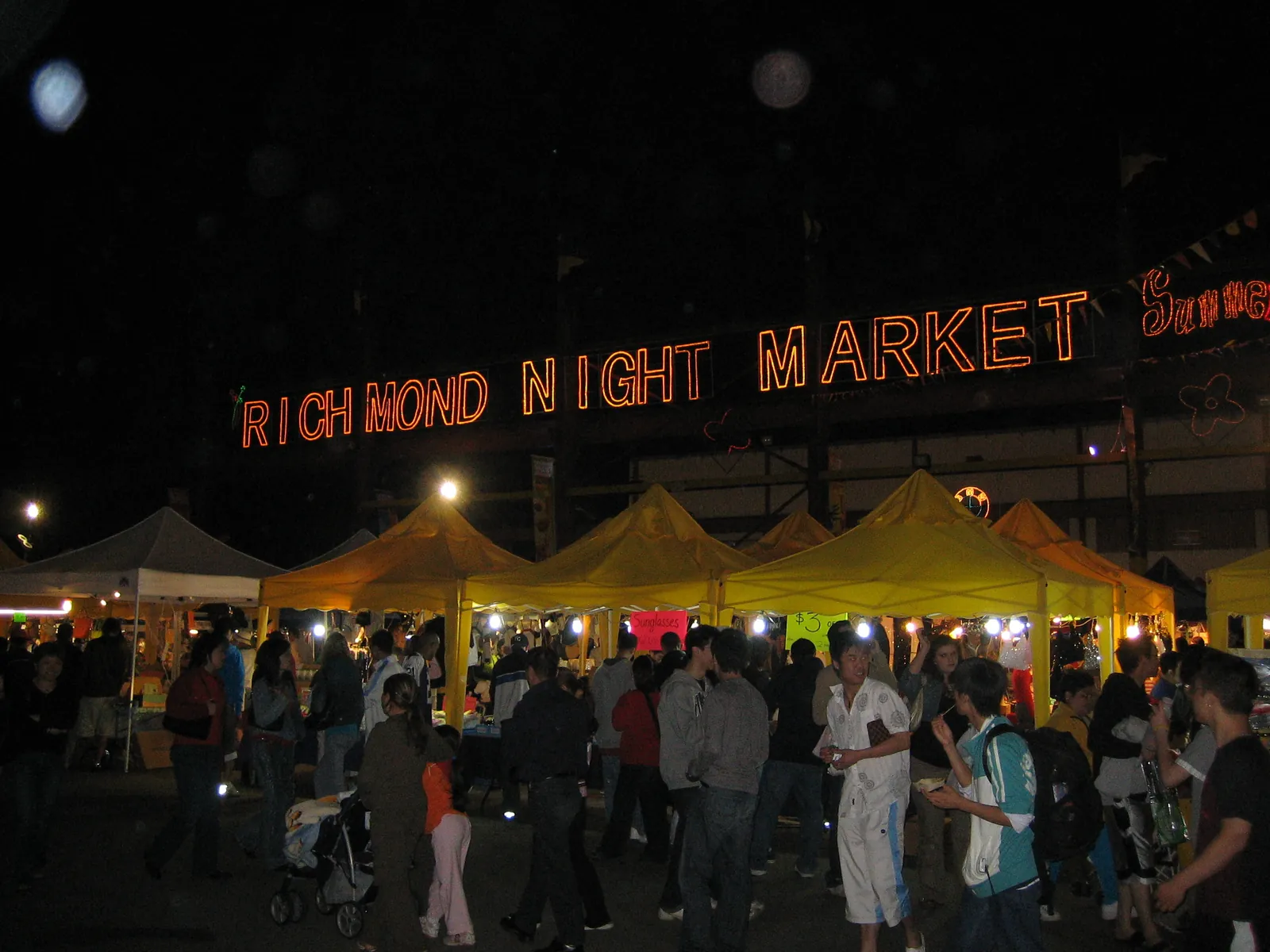
All of this makes the first month easy in a way it isn't for anyone else: a room through a WeChat group, a job through a cousin's friend, a dentist who speaks Mandarin, a hotpot table on your second night, and SUCCESS, the settlement agency that grew out of Chinatown, doing your paperwork with you in your own language. Use every bit of it.
The trap is that the ecosystem is complete. Richmond, Burnaby and the WeChat groups between them hold enough jobs, flats, restaurants, churches and weekend plans that a year can pass inside them, and at the end of it your English is where it was, your friends are all from the same three cities, and the freeze was never tested because you never stepped into it. I've watched this happen to sharp, funny people who moved across the world for a different life and rebuilt the old one, in a rainier place, with worse food.
The way to use both: groceries, dim sum and Lunar New Year in Richmond, and at least two things a week on the other side of the bridge, conducted in English, with people who aren't Chinese. A run club. A rec league. The Grind. It'll feel slower and more awkward than the WeChat group for about six weeks. Push through the six weeks; they're the difference between having moved to Canada and having moved to a rainier suburb of home.
The rule about invitations
Here is the pattern you'll notice after a month. Someone at the run club mentions Quarry Rock on Sunday. You have a bank appointment, you've met them once, you're tired, and the mention was so offhand it barely registered as an invitation. In most cities you'd let it go and there'd be another next week. In Vancouver there might not be: the offhand mention was the invitation, and if you don't pick it up, nobody repeats it. So the rule is that anything with a day and a time attached gets a yes, and anything without one ("we should hang out") gets politely forgotten. The general version of this is a post of its own; the Vancouver-specific part is that you have to apply it to invitations so casual you could easily miss them.
The second half of the rule is harder. At some point, earlier than you'd like, you have to be the one who says the day and the time. Not because you're the organising type (you don't need to be) but because almost nobody here does it, and eight people who'd all quite like to go up the Grind can stay eight people who never go, indefinitely, for want of one sentence. Put the sentence in the chat: "Grind Saturday, 8am, coffee after." Two people will come. The following Saturday, four.
It's also why we built MeetMap: a map of small plans happening soon near you: a coffee at eight, a seawall run at seven, a table at a Main Street brewery with three seats left. Each pin shows the time, the place and how many seats remain; take one and you're in the group chat. It's free to look, it's not a dating app, and it exists because every newcomer here has sat in a basement suite at seven on a Friday with nothing on the calendar. The short version of this post has the Vancouver-shaped examples. If the map is empty where you are, that's the same rule again: post the first plan, "Quarry Rock, Sunday 9am, doughnuts after, four seats", and let the map do the asking.
What a social month costs
One person, on top of rent, Canadian dollars, rounded. Tax goes on at the till (5% GST, and 7% PST on most goods), and restaurants expect a 15–18% tip, so the menu price is never the price.
| Cheap month | Normal month | |
|---|---|---|
| Transit (monthly pass) | 117 (one zone) | 157 (two zones) |
| Trails, seawall, beaches | 0 | 20 (a Grind download) |
| Run club, Wanderung, Meetup | 0 | 0 |
| One paid activity a week (climbing, league, night ski, class) | 60 | 200 |
| Coffees after things (C$5–6 each) | 40 | 80 |
| Pub or ramen nights (C$25–40 each) | 120 | 300 |
| Phone | 35 | 50 |
| Month | ~370 | ~800 |
The cheap month is entirely possible and not sad; the good bits of this city are parks. The money goes on eating out, which is expensive here by any standard, so be the person who suggests the seawall rather than the restaurant.
A first-month plan
Week 1: paperwork and the seawall. SIN, bank, SIM, Compass card, a room you've walked into. Walk the seawall from the West End to Second Beach one evening so you know what the city is for. Pick up your nearest community centre's programme guide. If you're Chinese, do this week's groceries in Richmond and let it be easy.
Week 2: one repeatable thing. A run club twice, or The Hive twice, or the same café at ten every morning. Pick one; the point is being seen twice by the same people. BlaBla or a Meetup on the Thursday. Say yes to whatever's suggested afterwards.
Week 3: the North Shore. Quarry Rock on Sunday morning with whoever you've met, or via Wanderung if you haven't. Doughnuts. Book something with a season: a rec league, a six-week class, a Sun Run entry, a Seymour night pass if it's winter. Propose one plan yourself, out loud, with a time in it.
Week 4: post it. "Grind Saturday 8am, coffee after" (or the winter equivalent) in every group chat you're in, and on the map. Go to your weekly thing again. Then look at the calendar: two things a week on the English-speaking side of the bridge means you're doing this right. If it's one, that's what month two is for.
FAQ
Is the Vancouver freeze real, or is it just me?
Real, and measured: the Vancouver Foundation found half of residents find it hard to make new friends here (a third when it first asked, in 2012) and one in four are alone more often than they'd like. It's also not personal. Nobody decided against you; they didn't decide. The fix is to be the person who names a time and a place.
How long does it take to make friends in Vancouver?
Longer than most cities. Acquaintances in a month if you do one weekly thing, real friends in three to six months, a group you'd call on a bad day in about a year. Summer arrivals go faster; November arrivals should wait until spring before judging.
Where do young people and newcomers live?
Mount Pleasant, the West End, Commercial Drive, Kitsilano if you can afford it (one-beds C$2,200–2,400), Burnaby and New Westminster if you can't (C$400–800 less). Students are at UBC and in Kits, around Metrotown and Burnaby Mountain, and along the Canada Line in Richmond. Stay on the SkyTrain grid.
Is Vancouver safe for someone new?
Yes, by any big-city measure. The Downtown Eastside along East Hastings is confronting rather than dangerous; walk through in daylight, take another street at night. Bike theft is the crime you'll actually meet, so register the bike and buy a real lock. The scams to know are fake rental listings (never pay before you've been inside) and calls claiming to be immigration or the tax office (hang up). For meeting someone off an app for the first time, the safety page is short and worth the two minutes.
How do I make friends in Vancouver as an international student?
Clubs Days in September, the Varsity Outdoor Club, one rec league, and at least one weekly thing off campus, because UBC and SFU are both bubbles. If you're Chinese, be deliberate about the split: Richmond and the Chinese student associations for comfort, an English-speaking club or team for the reason you came. Both, every week.
What's the best time of year to arrive?
May or June, no contest: the Grind opens, the beaches fill, every plan is outside. September is fine, a month of good weather and Clubs Days before the rain. January is the hardest start; if that's you, book a night-ski pass and a climbing membership in week one and treat the rain as the reason to see people rather than the reason not to.
Before you decide the city is cold
Give Vancouver a full turn of the seasons before you judge it, and judge it on the right thing. Friendliness it has plenty of; what it's short of is people willing to say "Saturday, eight, the Grind" first, and that's a job you can take on. Same hour on the seawall, one weekly thing, two evenings a week on the far side of the bridge from Richmond, and the sentence with a time in it. The friends come slowly here. Most of the people I know who stuck it out to a second winter are still going up the Grind with the ones they made in the first.
