Home›Blog›Taipei solo travel guide: safety, where to stay, what to do, and how to meet people (2026)
Taipei solo travel guide: safety, where to stay, what to do, and how to meet people (2026)
The menu on the wall of a rechao place is not really a menu. It's a maths problem. Every dish is around NT$100–200, every dish is sized for four, the beer lives in a fridge you open yourself, and the plastic stools come in sixes. I've eaten at one alone — two dishes, one Taiwan Beer, a waiter looking at me the way you'd look at someone who turned up to a wedding by themselves. It was fine. It was also obviously not how the food is meant to be eaten.
That's Taipei on your own in one picture. It's one of the safest, easiest, most courteous cities you can land in, and the solo version is genuinely good: a metro that runs like a watch, night markets in portions of one, a 7-Eleven on every corner, a twenty-minute staircase up Elephant Mountain that ends at the postcard. What it isn't, by default, is social: nobody will bother you, and nobody will approach you either, so any company you have by day five is company you went out and arranged.
The practical half comes first — safety, neighbourhoods, the airport train, prices, a three-day plan. The second half is about the table: how someone on their own ends up at a full rechao on a Thursday, on a Saturday hike, or at a board-game café with three people who were strangers at seven. Everything is in New Taiwan dollars as of September 2026; treat each number as "around", because they move. NT$100 is a little over US$3.
Taipei solo travel at a glance
| Is it safe alone? | Very. The risks are scooters, typhoons and earthquakes, not people. |
| How many days | 3 full days for the city; 4–5 with Jiufen or Yangmingshan |
| Best months | October–November, then March–April. Dodge the plum rain (mid-May to mid-June). |
| Daily budget | NT$1,400–2,000 on a dorm-and-night-market budget; NT$3,500–4,500 comfortable |
| Getting around | MRT with an EasyCard, buses for the hills, YouBike along the river, a yellow taxi or Uber after midnight |
| Where to sleep | Zhongshan for calm, Ximending or Taipei Main Station for company, Dadaocheng for the cheapest central beds |
| Language | Mandarin. Signs are bilingual, younger people manage English, Google Translate does the rest |
| Payment | EasyCard for transport and 7-Eleven; cash for night markets, rechao and small eateries; cards in hotels and restaurants |
| Apps | Google Maps for the buses, YouBike for the bikes, MeetMap for the five empty stools at the rechao table (explained below) |
Is Taipei safe for solo travellers?
Yes, without a caveat, and I'd put it ahead of Tokyo as a first solo trip for anyone nervous about the idea. Violent crime against visitors is close to nonexistent, people leave a laptop on a café table to hold the seat while they go to the toilet, and a phone left in a taxi has a fair chance of coming back. The safety conversation in Taipei isn't about people. It's about traffic and weather.
Scooters. The one real hazard. There are close to 15 million on the island; they filter down the right of every road, turn across the crossing while your light is green, and ride onto the pavement to park. Look right, left, right again, and never step off a kerb trusting the green man. Don't rent one without a licence that covers it, because the insurance won't.
Typhoons. July to September, sometimes October. The city announces a typhoon day the night before: shops and museums shut, the MRT runs until the wind gets serious, and everyone stays in with instant noodles. Do the same — every year somebody goes to the coast to watch the waves and doesn't come back. Book rooms and flights you can move.
Earthquakes. Frequent, mostly small, and the reason the buildings are built the way they are. Your phone shrieks in Chinese a few seconds before a big one and the tower sways; that's the design working. Drop, cover, hold, and don't run for the stairs. The magnitude-7.2 quake off Hualien in April 2024 was felt hard in Taipei with very little damage in the capital.
The scam list, which is short. Yellow taxis are metered and honest; the place to be careful is the airport arrivals hall, where unlicensed drivers murmur "taxi, taxi" — walk past to the official rank outside. The hostess bars and "piano bars" on Linsen North Road can produce a bill you didn't expect, and a tout will try to walk you in. Anyone in Ximending with a donation book or a very warm "let's have tea" gets a polite no. If anything does go wrong, the police are on 110, and the 24-hour tourist hotline on 0800-011-765 has English speakers.
The rest of the list is the same in every city — drink in sight, phone in a front pocket, first meetings in public — and lives on our safety page.
Is Taipei safe for solo female travellers?
Yes, and local women live this way: the last train home is full of women alone, the 7-Eleven is open all night and lit like an operating theatre, and being catcalled or followed is not something you'll spend energy on here. Two things worth knowing. Every MRT platform has a marked "safe waiting zone" under extra CCTV with an intercom to the station office, and standing in it after 10pm is a normal thing to do. And a taxi or Uber home is NT$150–250 for most rides inside the city, so there's never a reason to walk a long way at 1am.
When to go
Taipei is subtropical and it rains in every month. The question is which kind of rain.
- October to November is my pick. Daily averages around 22–25°C, the rain tailing off to under 100 mm a month by November, and the humidity finally lets go. The last Saturday of October is Taipei Pride, the biggest in Asia (31 October in 2026). November is quiet and cheap.
- December to February averages 16–18°C, which sounds mild and isn't: grey, drizzly for days, no central heating anywhere, and the damp gets into your bones. Lunar New Year (late January or February) shuts family businesses for several days and doubles hotel prices; the Lantern Festival two weeks later fills Pingxi with sky lanterns.
- March to April is the other good window: 19–22°C, cherry blossom and then calla lilies on Yangmingshan (mid-March to mid-April), rain building slowly.
- Mid-May to mid-June is the plum rain. A front parks over the island and it rains for a week at a time; June is up there with the typhoon months as the wettest of the year — well over 200 mm, closer to 350 in a bad one. Cheap, and you'll get a lot of museums done.
- July to September averages 28–30°C, which means 35°C on the street, a thunderstorm most afternoons, and typhoons. Hotels are 20–40% cheaper than in autumn. Mid-Autumn Festival (September or early October) is the night the whole city barbecues on the pavement.
How long to stay
Three full days covers the city — the old west, the museum, one mountain, two or three night markets, Beitou. Day four is Jiufen and the Pingxi line, or a proper day on Yangmingshan; day five is for whatever you found on day two. Jiufen, Tamsui and Pingxi are all under ninety minutes away, so there's no reason to change hotels. Past five days you're into the rest of the island: Taichung, Tainan and Hualien are two to three hours by train, and the flight home leaves from Taipei whichever way you loop.
Where to stay in Taipei on your own
Pick a district, not a hotel. Taipei is compact; anywhere within twenty minutes of Taipei Main Station on the red, blue or green lines is a fine base. Two pricing rules first: Friday and Saturday nights can be close to double the weekday rate, and summer and March run 20–40% cheaper than autumn.
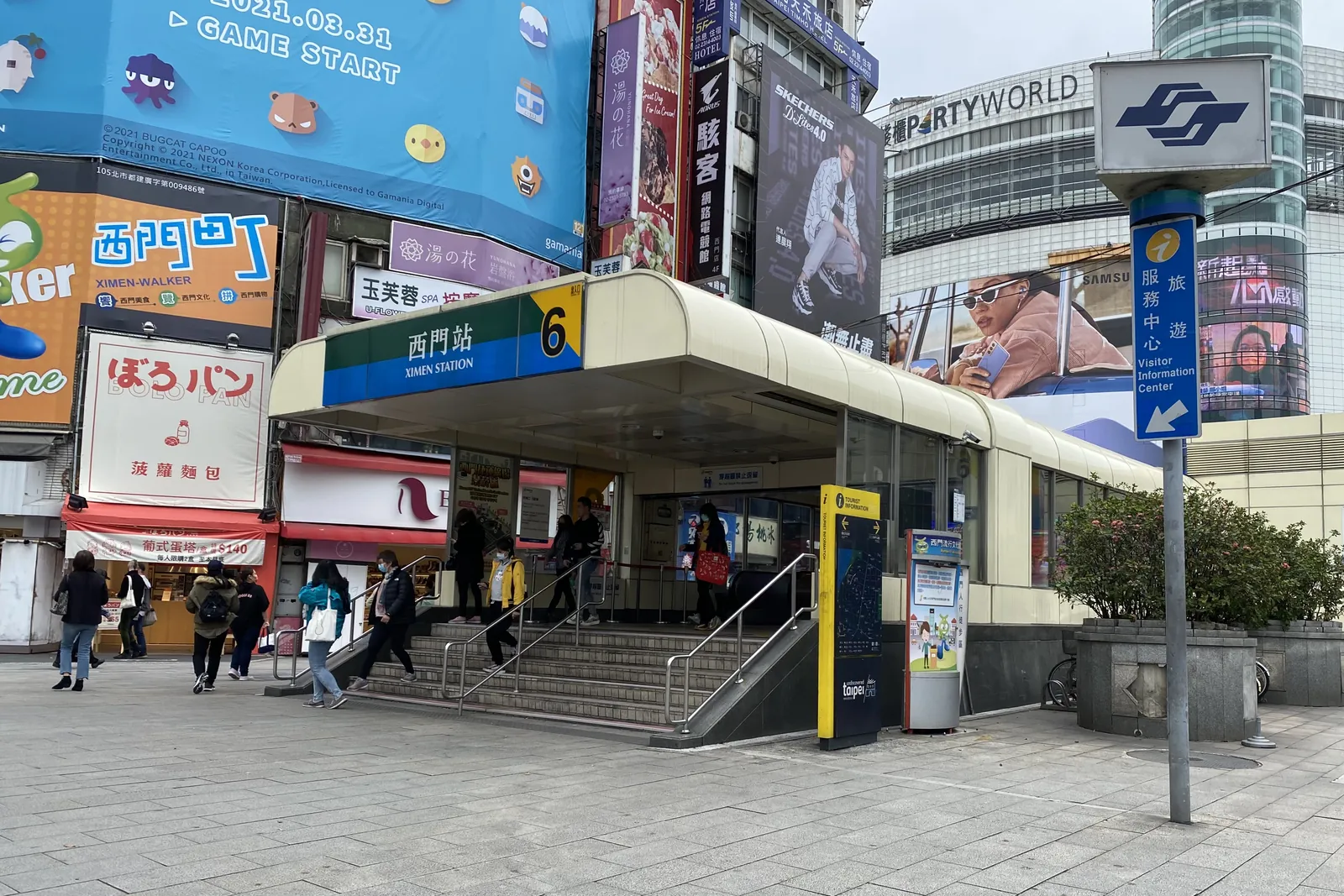
Ximending is the loud one — pedestrian streets, cinemas, cheap food, the LGBTQ bars around the Red House, and most of the city's hostels. Where I'd put a first-timer who wants company, and where you'll be woken up on a Saturday. Dorms NT$500–800; hotels NT$2,000–3,800.
Taipei Main Station has the red and blue MRT lines, the airport train, the railway and the high-speed rail, and the largest hostels with the largest common rooms are within five minutes' walk. Ugly, and the most convenient base for day trips. Budget hotels NT$1,000–2,200.
Zhongshan, and Chifeng Street in particular, is where I'd actually stay: independent cafés, small shops, the Fine Arts Museum two stops up the red line, Ningxia night market walkable, a few design-led hostels. Dorms around NT$550; hotels NT$1,800–2,800.
Da'an and Dongmen, around Yongkang Street, is the café-and-food district with Da'an Forest Park at one end. Quiet after ten, which suits some people and not others. Hotels NT$1,800–2,500; few dorms.
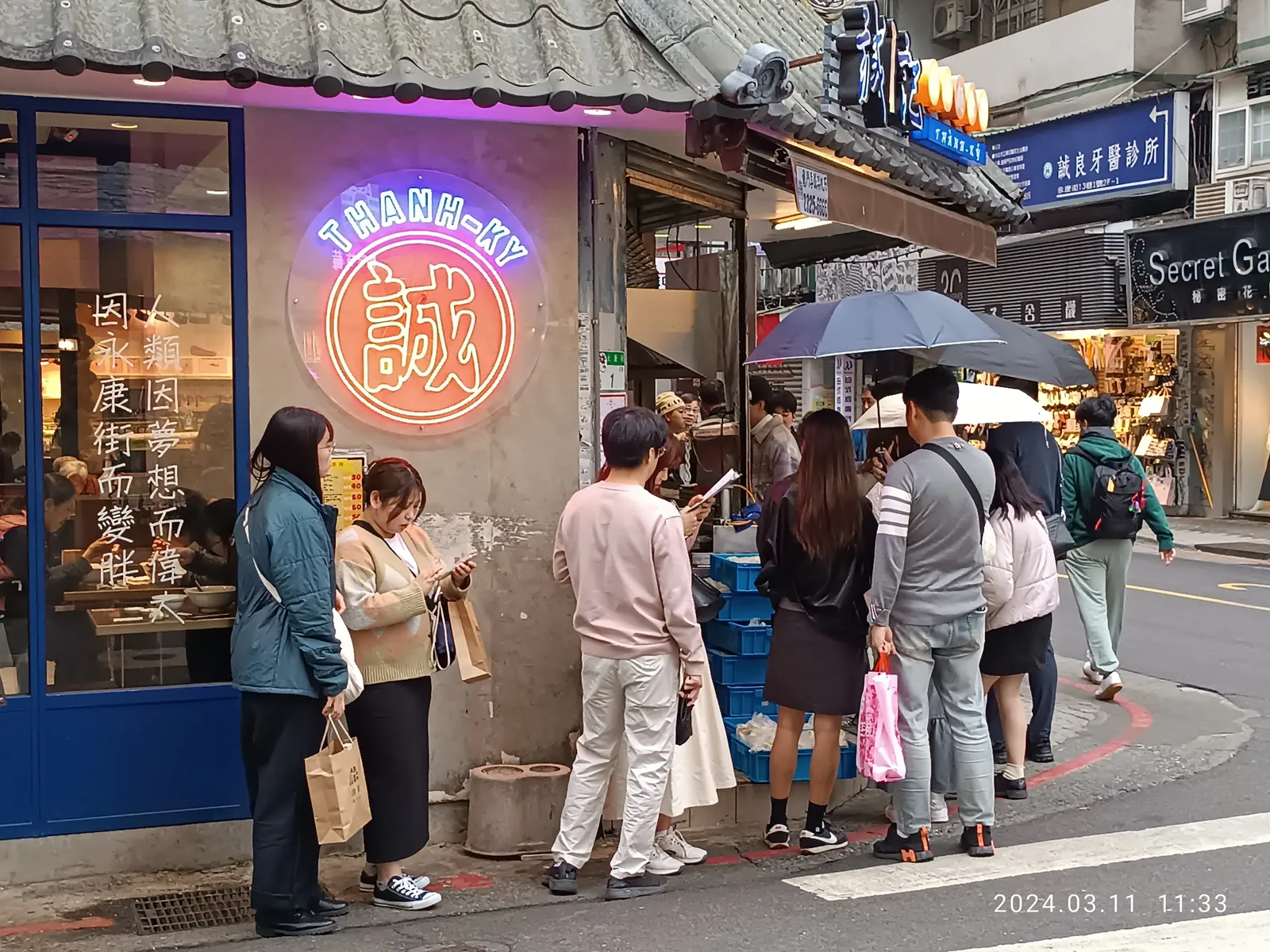
Dadaocheng and Dihua Street is the old tea-trade quarter: restored 1920s shophouses, the cheapest central beds in the city (guesthouses NT$1,200–2,200), Ningxia on the doorstep, very quiet lanes at night.
Xinyi is Taipei 101, the malls and the rooftop bars, with hotels from about NT$3,500. Sleep here if someone else is paying.
Across the city a dorm bed is NT$500–900, a private room in a hostel NT$1,200–2,000, and a decent two- or three-star hotel NT$1,800–3,500. Taipei is small enough that a wrong first choice costs you a twenty-minute MRT ride, not the trip.
Getting around
From Taoyuan Airport (TPE). The Airport MRT (purple) is the answer nine times out of ten: NT$160, and the Express reaches Taipei Main Station in 35–38 minutes, roughly every fifteen minutes from about 6am to 11pm. Buy and top up an EasyCard at the airport station. Bus 1819 is the 2am answer: around NT$140, 55–70 minutes to the bus station beside Taipei Main, round the clock. A taxi is around NT$1,000–1,300 by day and more at night, about 45 minutes; join the official queue outside arrivals. Uber is similar. Songshan, the small city airport for flights from Tokyo, Seoul and Shanghai, is on the brown line, fifteen minutes from the centre.
EasyCard. NT$100 for the card at any MRT station or convenience store, then top up in cash. Works on the MRT, every bus, YouBike, most taxis and at 7-Eleven. There's no big metro discount any more, but it's the only sane way to ride buses.
MRT. NT$20–65 by distance, six colour-coded lines, announcements in four languages, 6am to about midnight. No eating or drinking past the gates — the fine starts at NT$1,500 and they mean it. The last train around midnight is the one fact that shapes a night out.
Buses. NT$15 per fare segment with an EasyCard; tap on and tap off. Google Maps knows the timetables to the minute. You'll need them for the Palace Museum, Yangmingshan and Jiufen, and for little else.
YouBike 2.0. The yellow shared bikes are docked at almost every MRT exit. Register in the app with a credit card; in Taipei City the first thirty minutes are free for registered users, then NT$10 per half hour. The riverside paths — a hundred-odd flat, car-free kilometres — are the best ride in the city.
Taxis. Yellow and metered: NT$85 for the first 1.25 km, NT$5 per 200 m, plus NT$20 between 11pm and 6am. A fifteen-minute ride inside the city is NT$150–250, paid in cash, by card or with the EasyCard. Drivers are honest; their English usually isn't, so show the address in Chinese. Uber works and costs about the meter; locals use LINE Taxi and 55688.
What to avoid. Renting a scooter on day one. Crossing on a green without looking right. The men saying "taxi" inside the airport. And being at Raohe at 11:30pm on the assumption there's a train home at 12:30 — there isn't, but there's an Uber.
Things to do alone in Taipei
Twelve things, starting with the ones that work best on your own.
1. Xiangshan at 5:30, morning or evening
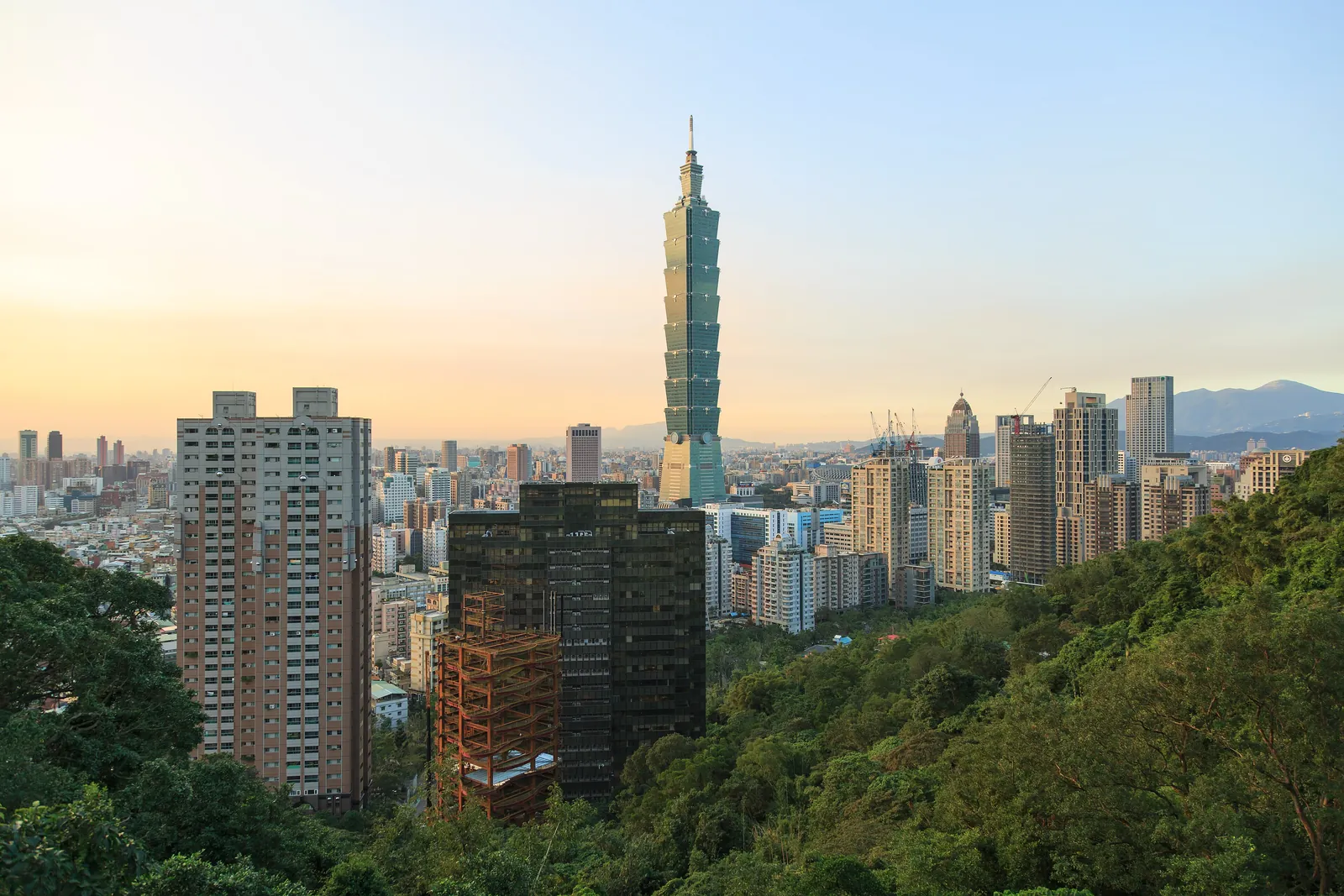
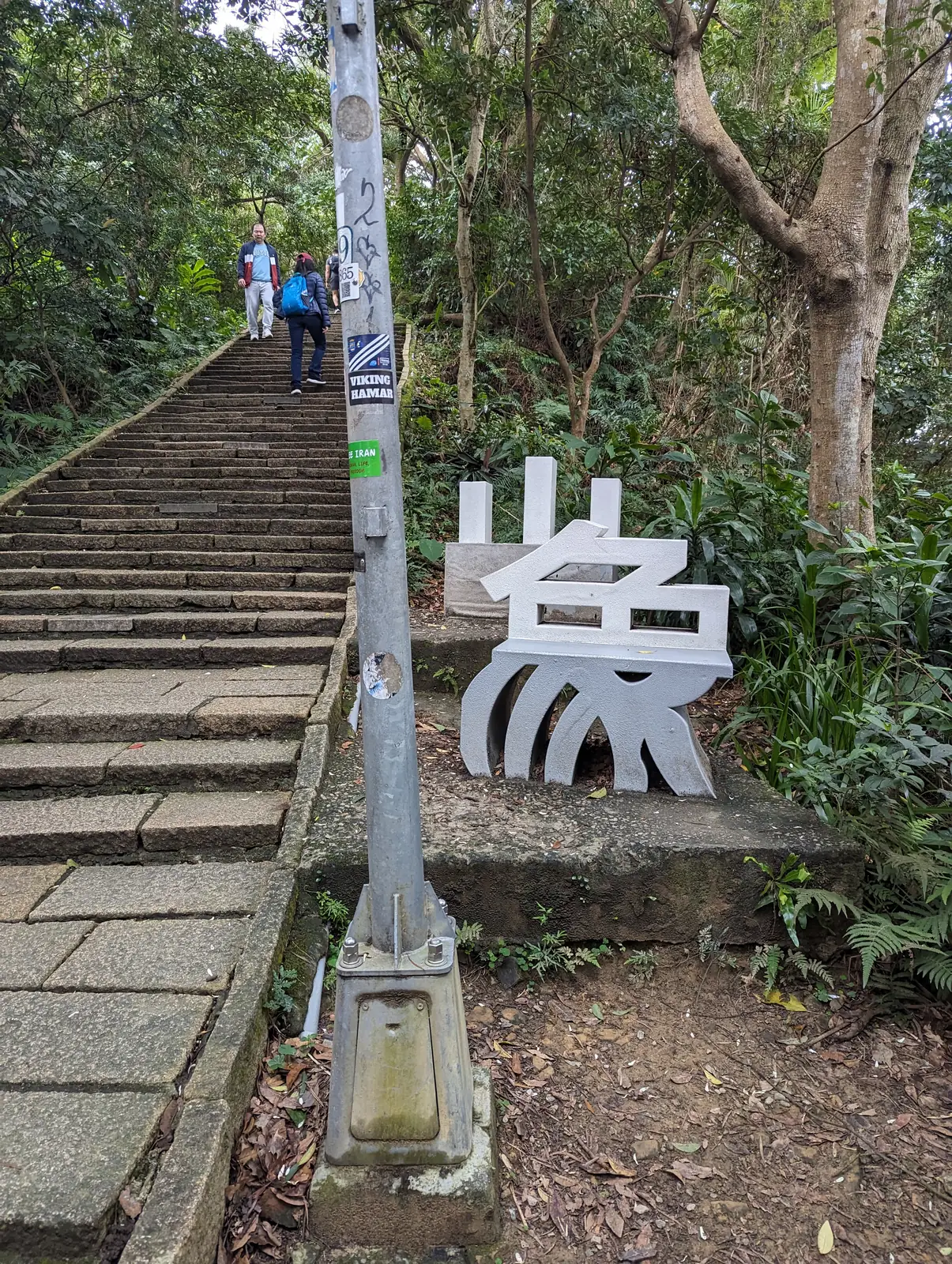
Elephant Mountain. Red line to its eastern end, Xiangshan station, exit 2, ten minutes through the park to the trailhead, then about six hundred stone steps — twenty to thirty minutes, steep, lit at night — to the Six Giant Rocks and the view of Taipei 101 that is on every postcard. Free, always open. Sunset is the famous slot and a queue for the rocks; 5:30am has the same view with the retirees doing tai chi. It's also the easiest plan in the city to invite someone to, which matters later.
2. Taipei 101, from the right floor
The observatory on floors 88, 89 and 91 is NT$600, or NT$980 with the open-air 101st-floor deck; exit 4 of Taipei 101/World Trade Center station feeds straight into the basement. Worth doing once, sixty to ninety minutes before sunset so one ticket gets you daylight, the sunset and the lights. For what it's worth, Xiangshan is the better view, because Taipei 101 is in it. The tuned-mass damper on 88 is what you'll actually remember.
3. The National Palace Museum, in the morning
NT$350; 9am to 5pm, closed most Mondays (it opens on some holiday Mondays and during blockbuster shows, so check the site); from MRT Shilin the R30 minibus drops you at the door in about fifteen minutes. Everyone queues for the Jadeite Cabbage and the Meat-shaped Stone — look for a minute, then pick two galleries, the bronzes or the ceramics, and give them two hours with the audio guide. One of the great collections of the world, and easiest to enjoy alone, because nobody is waiting for you.
4. Beitou in an afternoon
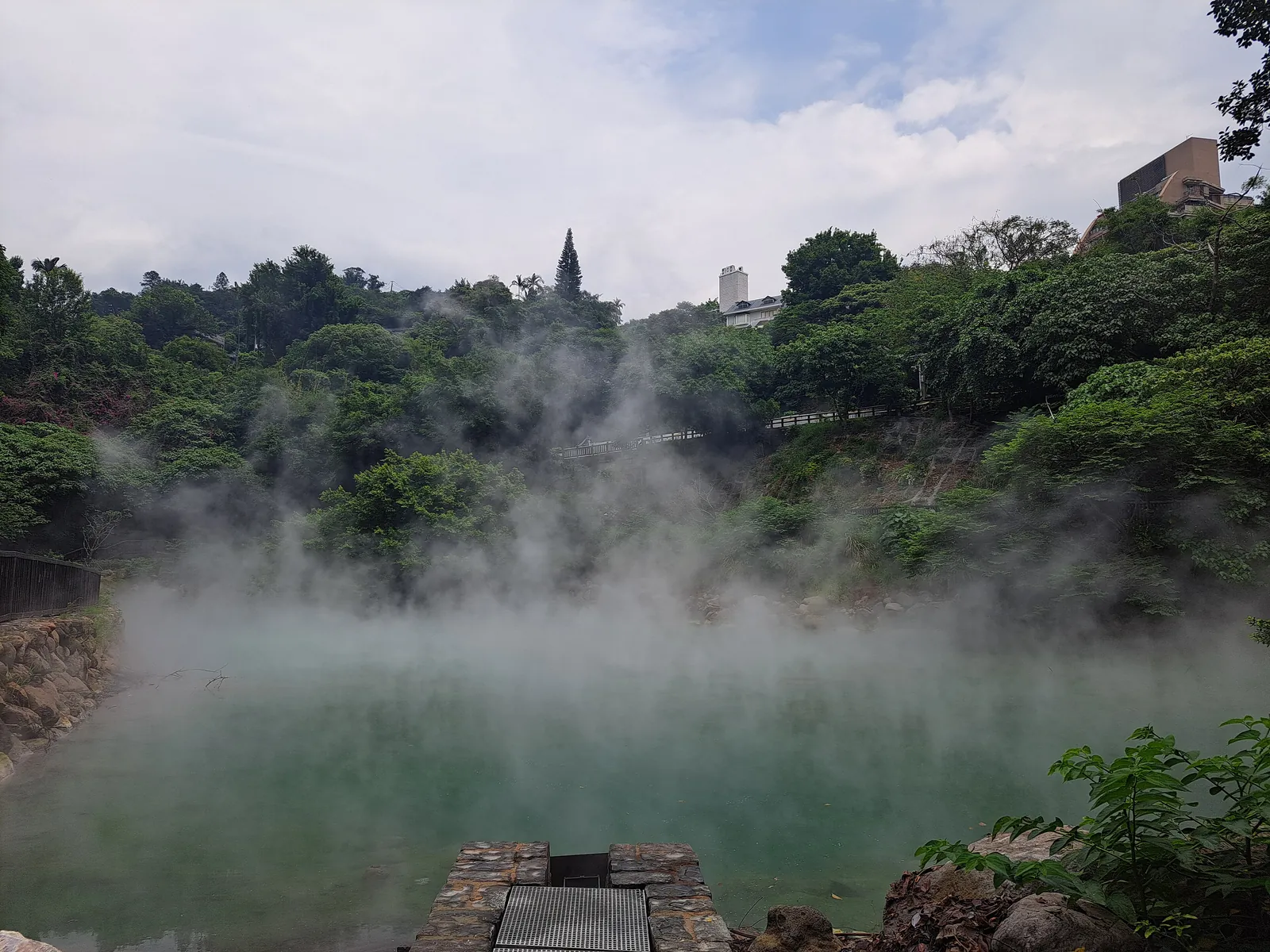
Red line north to Beitou, then change to the one-stop pink branch to Xinbeitou, about thirty minutes from Taipei Main. Thermal Valley (free, 9–5, closed Mondays) is a steaming green lake in a suburb; the Hot Spring Museum (free, Tuesday to Sunday) is a restored Japanese-era bathhouse. Then a bath. The cheap open-air public pool in Beitou Park — NT$60, swimsuits on — has been shut for a rebuild since January 2025; the works were last due to finish at the end of July 2026, already pushed back once, with the opening date to be announced afterwards, so check before you go. Meanwhile the bathhouses along the valley do public baths from around NT$100–300 and private tubs from about NT$400–800 an hour; the old Japanese-style ones are nude and separated by sex.
5. Yangmingshan on a weekday
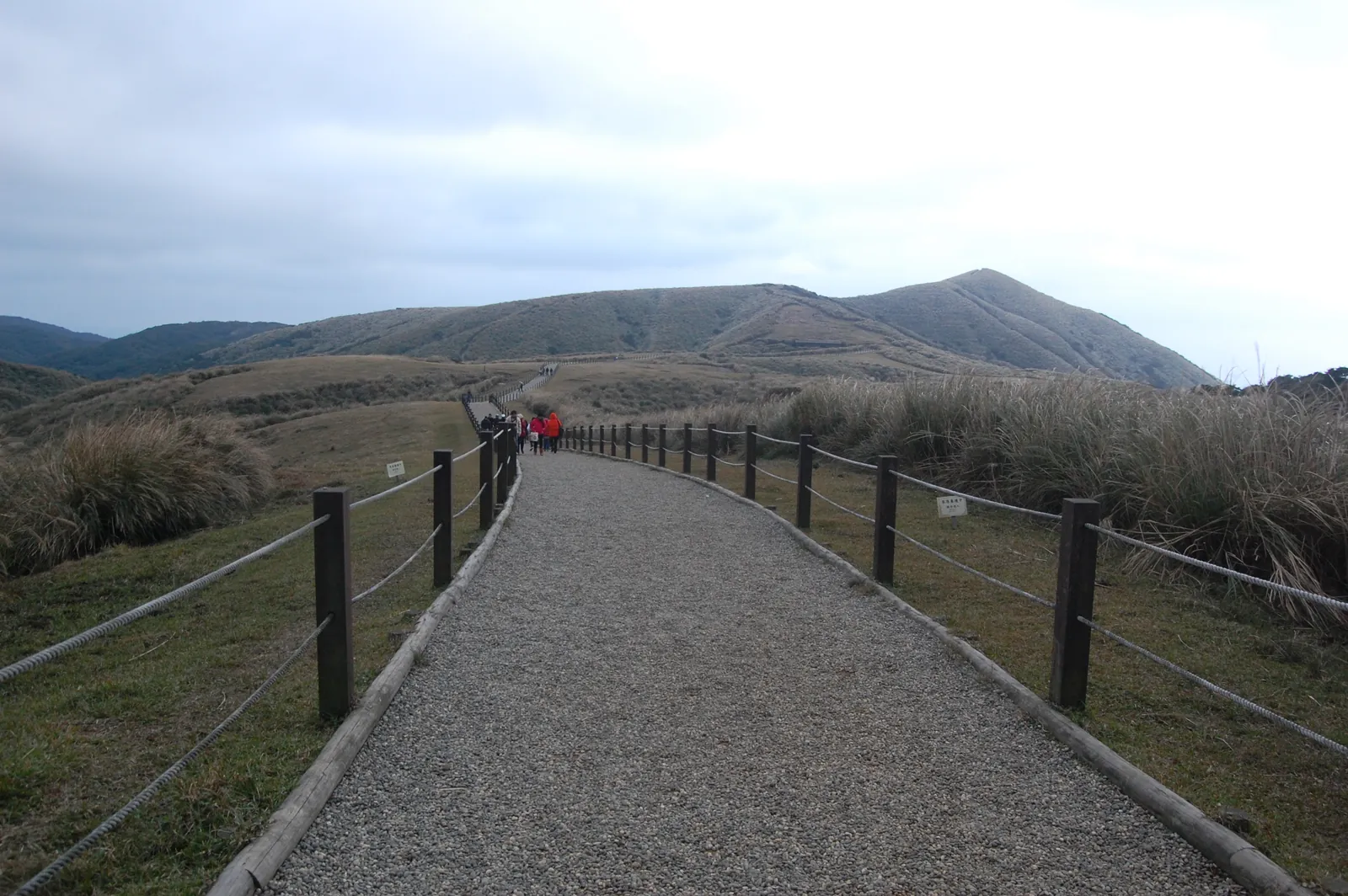
The volcanic national park on the city's north edge. Bus 260 from Taipei Main Station or Red 5 from MRT Jiantan, around NT$30 with an EasyCard, 40–60 minutes to the Yangmingshan terminal; then the 108 loop shuttle (NT$60 day ticket) to Qingtiangang — a 45-minute walk around a high meadow with water buffalo — and the fumaroles at Xiaoyoukeng. Free. Calla lilies mid-March to mid-April. Weekend buses are jammed and drivers skip stops once full, so leave before 8:30 or go on a Tuesday. Come down the other side to Beitou and soak.
6. Raohe, then Ningxia, then Shilin
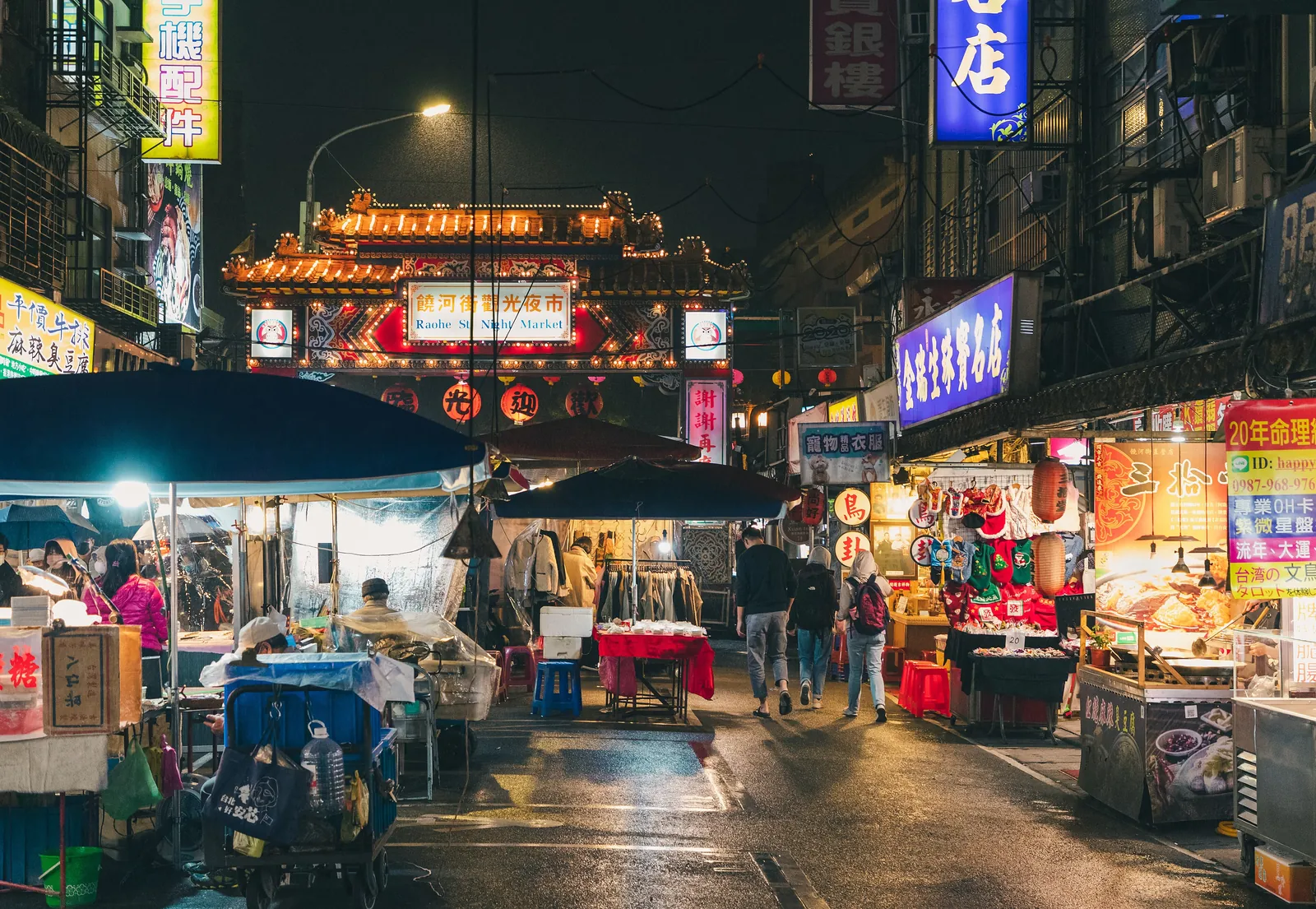
Three night markets, three evenings. Raohe (MRT Songshan on the green line, 5pm to midnight) is one street with the pepper-bun stall at the temple gate; an hour does it. Ningxia (MRT Zhongshan or Shuanglian, 5pm–1am) is small and entirely about eating — the taro balls, the oyster omelette. Shilin (get off at Jiantan, not Shilin; from mid-afternoon until around 1am) is the enormous one, food court in the basement. NT$200–350 fills you up at any of them, and nobody looks twice at a person eating a sausage on a stick alone.
7. Longshan Temple and the Wanhua lanes
Free, open from early morning until around ten at night, MRT Longshan Temple. The 1738 temple is loud with chanting at dawn and dusk and full of people throwing the crescent fortune blocks; watch for ten minutes, then try it. Bopiliao, the restored Qing-era street next door, is worth another half hour. Wanhua is the oldest, roughest-edged part of Taipei, which by Taipei's standards means an old man asleep on a bench.
8. Yongkang Street, done properly
MRT Dongmen, exit 5. Din Tai Fung's original shop on Xinyi Road only does takeaway these days; the famous queue is at its Xinsheng branch a few minutes' walk away (it moves fast, singles get seated first, ten xiaolongbao are around NT$300). Yongkang Beef Noodle is NT$250–300 a bowl; the mango shaved ice at the junction is about NT$200 and built for two, which is a hint. Come at 11am or 2:30pm to skip the worst of it, then walk the lanes south towards Shida.
9. Maokong by gondola, for tea
Brown line to Taipei Zoo, then the gondola — NT$180 one way (it went up in 2025), NT$300 for a day pass; 9am to 9pm, 10pm on weekends and holidays, closed most Mondays for maintenance (the first Monday of the month and public holidays excepted) — 25–30 minutes over the tea hills. The tea houses at the top charge NT$200–400 a head for a pot you brew yourself for as long as you like; go up around four and come down after the lights. The zoo below is around NT$100 and better than you expect.
10. Jiufen and the Pingxi line
Bus 1062 from the stop outside exit 2 of MRT Zhongxiao Fuxing — around NT$105, 60–90 minutes — to the old gold town stacked up a hillside: tea houses, lanterns, the staircase everyone thinks is from a Miyazaki film (it isn't, and it's still worth it). Go before ten or after four. Then a bus down to Ruifang for the Pingxi railway (around NT$20 to Shifen, or a NT$80 day pass) and the sky lanterns. A full day, and a better one with other people.
11. A cooking class, the group one
Two to three hours, around NT$2,500–3,500, six to twelve people, usually xiaolongbao and beef noodle soup, sometimes a market run first. Cookinn Taiwan (Zhongshan and Ximen), Make My Day Cooking Lab and Jin's Table are the established ones. Put it on day one or two: the class ends around a shared table, and that table usually has a plan for the evening.
12. A free walking tour on the first morning
Like It Formosa runs tip-based walking tours every day — a Historic route through the old west of the city and a "Golden Age" one — about two and a half hours, NT$300–500 a normal tip. Fifteen people who all landed this week and a guide who lives here. The cheapest orientation in the city, and the group tends to keep going to lunch.
Eating alone in Taipei
Most of Taipei is built for eating alone. Breakfast shops (an egg crêpe and a soy milk, NT$60–80) have a tick-box order sheet with a "1 person" line. Lunch is a NT$100–150 bento, or a self-service buffet where you point at six things and pay by the plate, or beef noodles for NT$150–250, or braised pork rice for NT$40–60. Night markets are portions of one by design. And Taipei has a whole category of one-person hotpot chains — a personal pot, NT$250–450, no shame — because locals eat alone too.
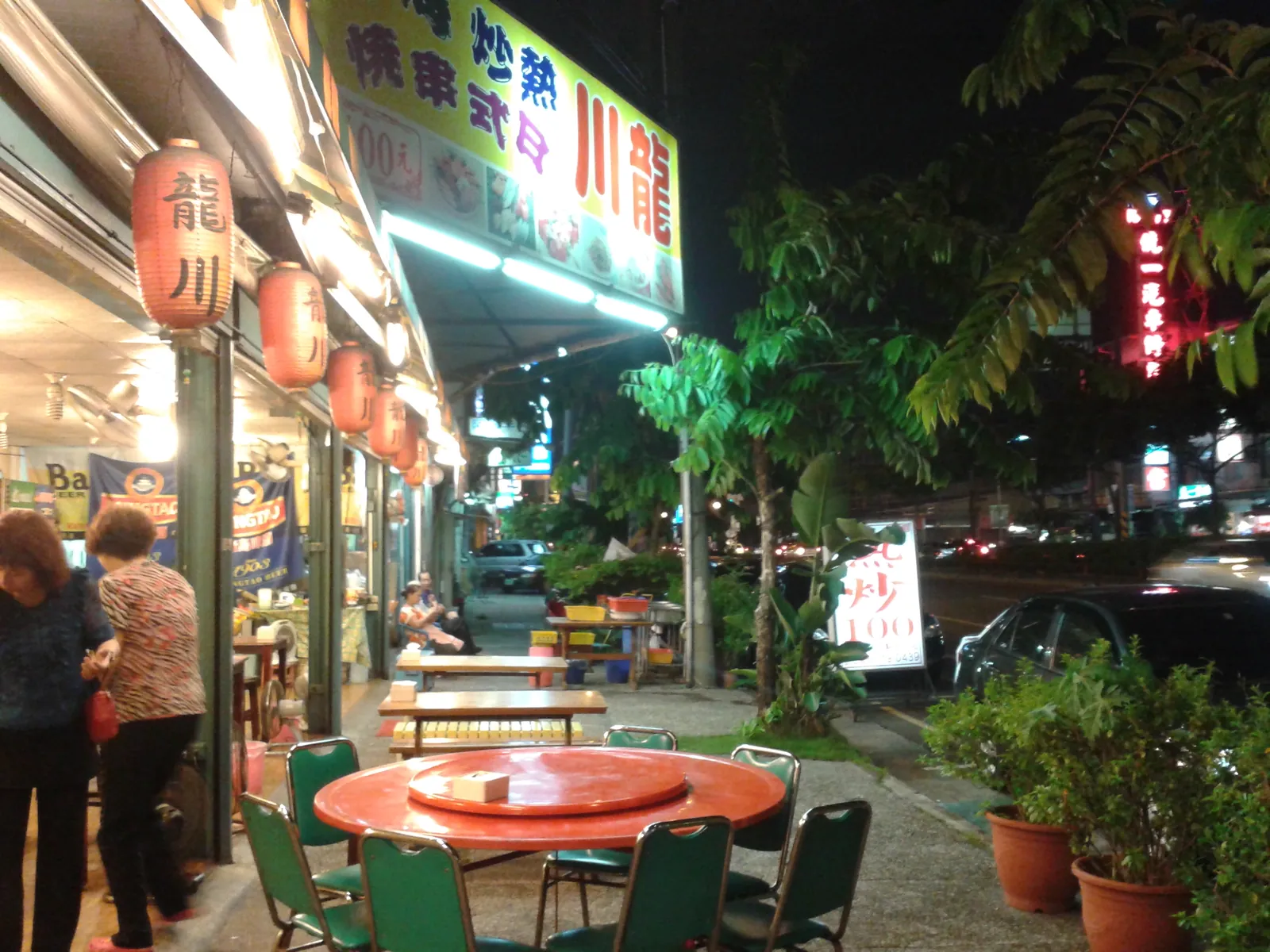
The exception is the food Taipei is proudest of. Rechao — the stir-fry places with the live-seafood tanks, the plastic stools and the beer fridge — serves dishes at NT$100–200 each, sized for four to six, and the point is a table covered in three-cup chicken, clams with basil, stir-fried water spinach, salt-and-pepper squid and a dozen bottles of Taiwan Beer at NT$60–80 apiece. Changan East Road is the rechao street (MRT Songjiang Nanjing); most places open at five and run past midnight. Proper hotpot is the same story, and so is KTV. The second half of this guide is about filling the other five stools.
How to meet people in Taipei
Taipei's particular problem isn't hostility. It's politeness. Taiwanese people are kind, helpful and shy with strangers, and they will not start a conversation with you on the MRT; the hostels are calmer than in Bangkok or Hanoi; the bars are small. If you wait for the city to come to you, it won't. But this is also a city that runs on group activities — hiking clubs, board-game cafés, language exchanges, tables of six at the rechao — and every one of them has an open door. In the order I'd try them:
Sleep where the lounge is. The big hostels around Taipei Main Station and in Ximending are about the only places in the city where a stranger will ask what you're doing tomorrow. Ask the desk what's on — several run a night-market walk or a Friday drink — and if dorms aren't for you, most of them rent private rooms and let you use the lounge all the same.
Language-exchange nights do most of the work for you. Half the room is Taiwanese people who want to practise English and have, by turning up, already decided to talk to strangers — rarer than it sounds in Asia. The Thursday board-games-and-language-exchange night at DeRoot, by MRT Zhongxiao Xinsheng, has been a fixture for years (NT$150 with a drink; the Wednesday and Friday editions are NT$200), and Meetup lists three or four more a week around Shida and Gongguan, near the universities. Go once and you'll have a LINE group by the end.
Board-game cafés. Taipei has hundreds, the staff teach the rules (often in English), and a table is a couple of hundred NT$ a head for an afternoon. Gongguan, Shida and Zhongshan have the densest clusters, and several post open tables on their LINE or Facebook pages, where you join four strangers for three hours. Here a board-game café is a normal Saturday night rather than a niche, and it's the easiest room in the city to walk into alone.
Hike with a group. Taiwan Adventures runs paid, guided days; Taipei Hikers and a few others on Meetup run free weekend walks on Yangmingshan, Jinmian Mountain and the coast. The local routine is fixed — hike, then rechao or a hot spring — and a group that has walked up Qingtiangang together has no trouble sitting in Beitou's hot water together afterwards.
Use the hill and the park. Xiangshan at sunset is a crowd of people who came alone and are now taking each other's photos. Da'an Forest Park's loop at 7am is the same few dozen runners every morning, and they notice a new one. The riverside path on a YouBike is where the running crews meet; "Taipei run club" on Instagram finds the English-friendly ones.
Pick rooms where people stay. The student bars of Gongguan; Revolver, near the Chiang Kai-shek Memorial, on an open-mic night, when the room is half foreigners and half locals; the craft-beer bars of Da'an; the cafés on Chifeng Street on a Saturday, where the same faces come back every week; the shared benches at Ningxia. Taipei cafés don't mind if you stay four hours, and by the fourth hour you've usually talked to someone.
Three local habits. People swap LINE, not phone numbers, so have it installed. Splitting the bill is normal and expected. And be concrete: Taiwanese people are reserved about starting things and generous once one exists, so an invitation with a day, a time and a street in it — "rechao, Thursday, seven, Changan East Road" — gets a yes where a vague one gets a smile.
Join whatever's already moving. If someone in the lounge is going up Xiangshan at 5:30, the museum can wait a day; an ordinary plan with people attached beats a better one without them. There's a longer piece on this — how to meet people in a new city when you know nobody — and a shorter Taipei-only one here.
Name a time yourself. Lounges are full of people who'd come if asked and won't do the asking. Put a number in it — "Changan East Road, seven, five seats" — because a rechao table needs exactly that many people, and a stated shortage is easier to say yes to than an open invitation.
And the app we built for exactly this. MeetMap is a map of small plans happening soon near you: a coffee at eight, a hike on Saturday, a table with one seat left. Each pin shows the time, the place and how many seats remain; take one and you're in the group chat. Looking is free, it's not a dating app, and it exists because every solo traveller has stood in a hostel lobby at 7pm hoping someone would say something. If the map is quiet in Taipei when you open it, post the first plan — "Xiangshan at 5:30", "rechao at seven, four seats" — and see who turns up.
What Taipei costs per day
One person, one day, in NT$, give or take.
| Budget | Mid-range | Comfortable | |
|---|---|---|---|
| Bed | 700 (dorm) | 2,200 (hotel) | 4,500+ |
| Food | 450 (night markets, bentos) | 1,000 (a proper dinner) | 2,000+ |
| Transport | 100 (MRT, YouBike) | 350 (plus a taxi) | 700 |
| One activity | 100 (a temple, a hot spring) | 600 (the museum, the 101) | 2,500 (a class, a tea house) |
| Day | ~1,400–1,600 | ~4,000 | 9,500+ |
You'll need cash more than you'd expect: night markets, rechao and small eateries are cash-only in practice, while hotels, proper restaurants and every convenience store take cards. Every 7-Eleven has an ATM and the local fee is small — it's your own bank's fee that adds up, so take out NT$5,000 or so at a time. There's no tipping.
A three-day Taipei plan for one
Day 1 — Old west, then the hill. Walking tour at ten, or Longshan and Bopiliao on your own. Yongkang Street for a late lunch at two, when the queue's gone. Chiang Kai-shek Memorial Hall and its square, free and enormous. Xiangshan at five for the sunset. Raohe at seven, and the green line home before midnight.
Day 2 — Museum, hot water, people. National Palace Museum at nine, two hours. Lunch at Shilin's daytime market or in Dadaocheng. Beitou for the afternoon: Thermal Valley, the museum, a bath. Back by six for a cooking class or a language-exchange night, and rechao afterwards with whoever's there.
Day 3 — A mountain and a street. Bus 260 to Yangmingshan by 8:30, Qingtiangang, down by two. Dihua Street at four — the old tea-trade street, restored shophouses, the wharf at sunset — then Ningxia at six, five minutes away. A board-game café after, or, if the weather's closed the mountain, swap the morning for Maokong and a pot of tea.
A fourth day is Jiufen and the Pingxi line, with the people from day two.
FAQ
Is Taipei good for first-time solo travellers?
Yes: safer than most of Europe, cheaper than Tokyo, Seoul or Hong Kong, with a metro you'll have learned by lunchtime and locals who are patient with visitors who fumble. What it won't hand you is company, which is the one thing to plan for.
Is Taipei safe at night alone?
Yes, including for women, including at 2am. Convenience stores are open, streets are lit, the last MRT is around midnight and taxis run after. The only Taipei-specific night advice is to stay out of the hostess bars on Linsen North Road and to look for scooters before you step off a kerb.
Do I need cash in Taipei?
Yes, more than you'd expect in such a modern city. Night markets, rechao, breakfast shops and small restaurants run on cash; hotels, convenience stores and proper restaurants take cards. Withdraw from the ATM in any 7-Eleven; NT$5,000 lasts a budget traveller two or three days.
Is it easy to meet people in Taipei?
Easier than the first evening suggests. Locals won't approach you, but the city is full of ready-made ways to sit at a table with them — language-exchange nights, board-game cafés, hiking groups, cooking classes — and all of them welcome a stranger who turns up alone. Pick one for your first evening and the rest tends to follow.
How much English is spoken in Taipei?
Plenty for a visitor. Signs, the MRT and tourist-area menus are bilingual, and younger people and hostel staff speak it. Taxi drivers, night-market stalls and rechao owners often don't; a Chinese address on your phone and a translation app cover that. "Xièxie" (thank you) and "bù hǎoyìsi" (sorry, excuse me) get you a long way.
Is three days enough for Taipei?
For the city, yes, if you use the mornings. Four lets you add Jiufen or a full day on Yangmingshan; five means you'll have a favourite café and somebody to eat rechao with. Beyond five, the extra nights are better spent in Tainan or Hualien than on a sixth night in Taipei.
Last thing
The maths problem on the rechao wall has one solution, and it isn't ordering less. Taipei will get you up the mountain, across the city and home before the last train without asking anything of you; the five other stools it leaves to you. Go to the Thursday exchange, say yes to the 5:30 hill, and when it's seven o'clock and you're looking at that menu again, write "Changan East Road, seven, five seats" and press send.
